Equity Research Reports
20 real reports written by analysts at 8 banks between 2010 and 2015, hosted here as PDFs. Each one explains how a company makes money and forecasts its next few years of earnings, then values the stock off those numbers. For learning fundamentals, few free resources come close.
Why research reports teach so well
A sell-side analyst covers a handful of companies for a living and writes for portfolio managers who will act on the work. That audience forces a report to be concrete. It has to show how the company earns revenue and which numbers drive the earnings model, then put a value on the stock with comparable-company multiples and a DCF. Textbooks describe the method. A report shows an expert applying it to a company you have heard of, with the full forecast tables attached.
Read an initiation front to back once, then open the earnings model and trace how each line feeds the valuation. After two or three you will recognise the structure instantly, which is exactly what interviewers expect when they ask you to walk through a stock.
Initiations of coverage
When an analyst picks up a stock for the first time, the report runs anywhere from 15 to 120 pages and builds everything from scratch: how the business works, where the industry is going, the full earnings model, and the valuation behind the price target. Start here.
17 on this page ↓Update notes
After an earnings release or a company event, the same analyst writes a few pages on what changed and whether the call still holds. Read one after an initiation to see how a model gets revised in practice.
3 on this page ↓Initiations of coverage
17 reportsThe first report an analyst publishes on a company, so nothing is assumed. Each one lays out the business model and the industry before it gets to the earnings forecast and the valuation that produces the target.
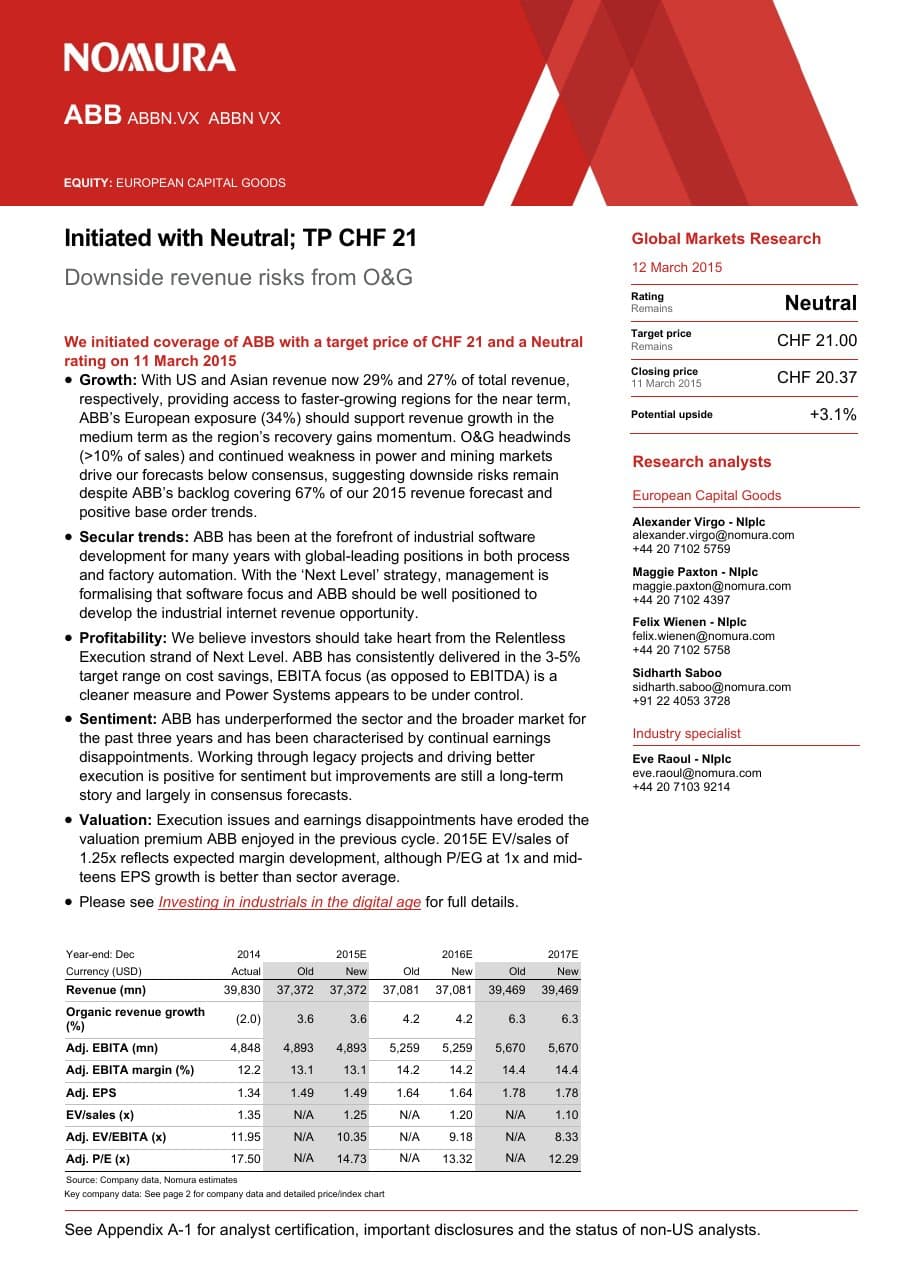
- ABBNomuraHow analysts frame a conglomerate initiation around four pillars: growth, secular trends, profitability, and sentiment.Initiation of coverage · March 12, 2015 · 24 pagesTarget CHF 21.00
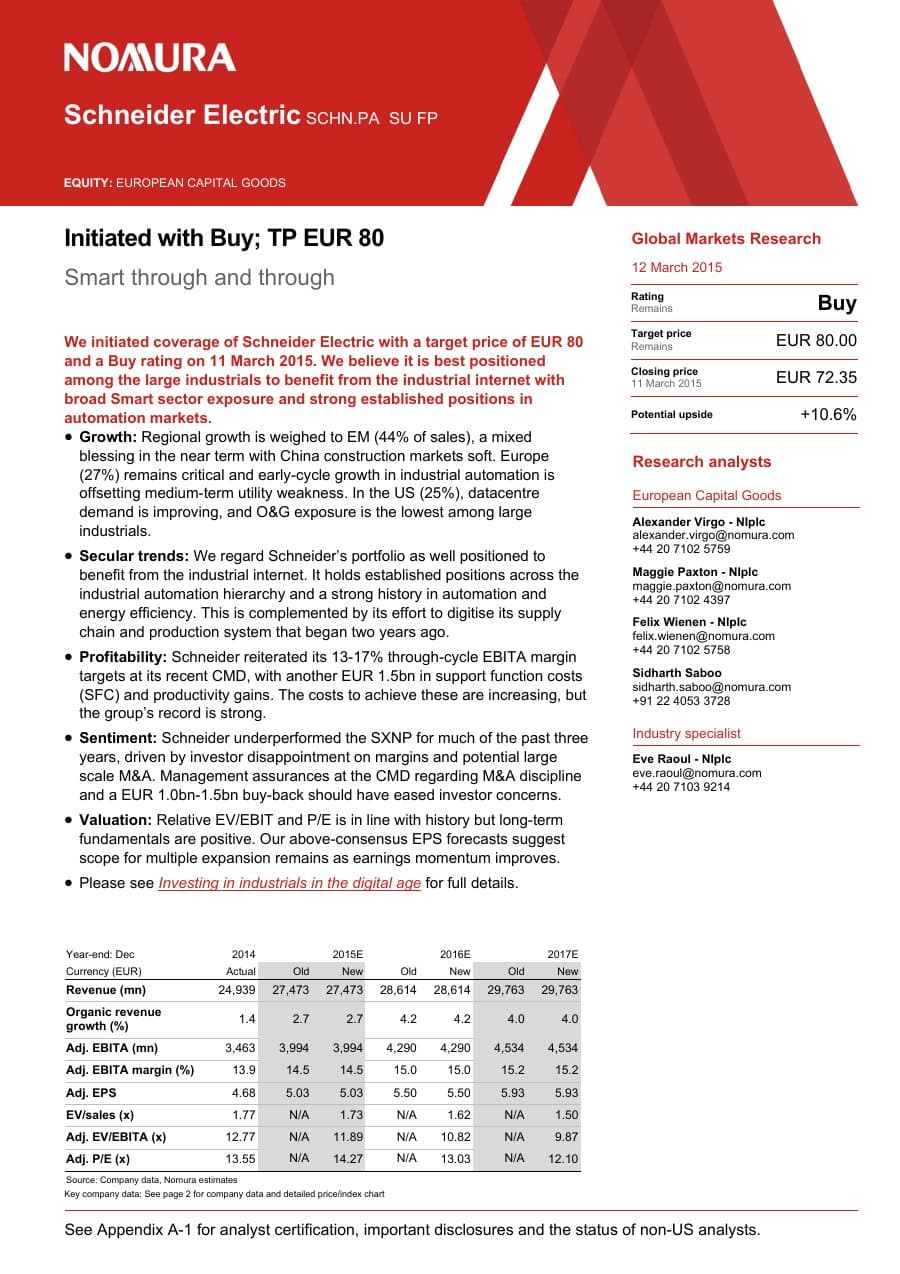
- Schneider ElectricNomuraHow a thematic sector view on the industrial internet becomes a stock-specific Buy with a target blended from multiples and a DCF.Initiation of coverage · March 12, 2015 · 21 pagesTarget EUR 80.00
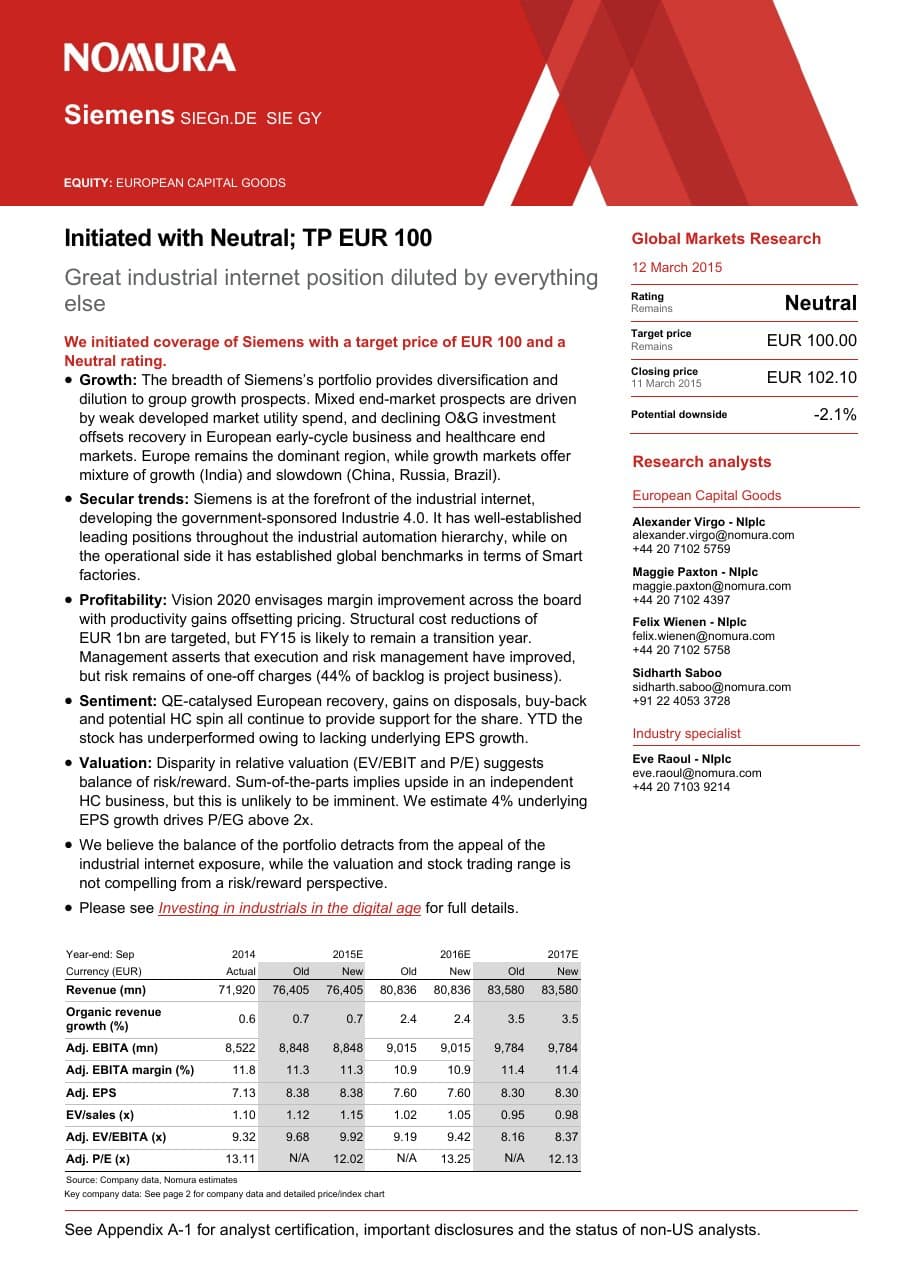
- SiemensNomuraHow a sum-of-the-parts valuation separates a conglomerate's segments and why a strong division may not lift the whole stock.Initiation of coverage · March 12, 2015 · 22 pagesTarget EUR 100.00
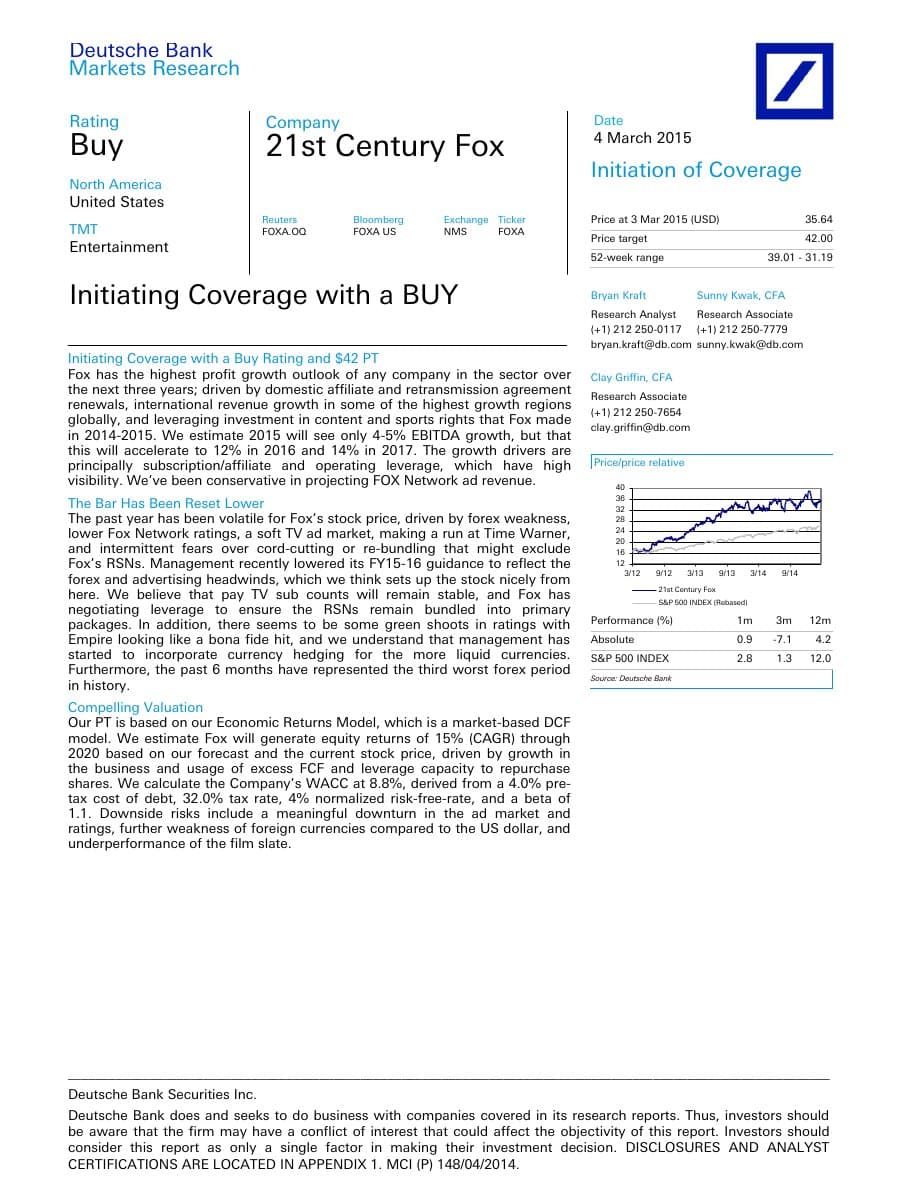
- 21st Century FoxDeutsche BankHow Deutsche Bank's Economic Returns Model, a market-based DCF, turns a WACC and a free cash flow yield into an implied equity return.Initiation of coverage · March 4, 2015 · 17 pagesTarget USD 42.00
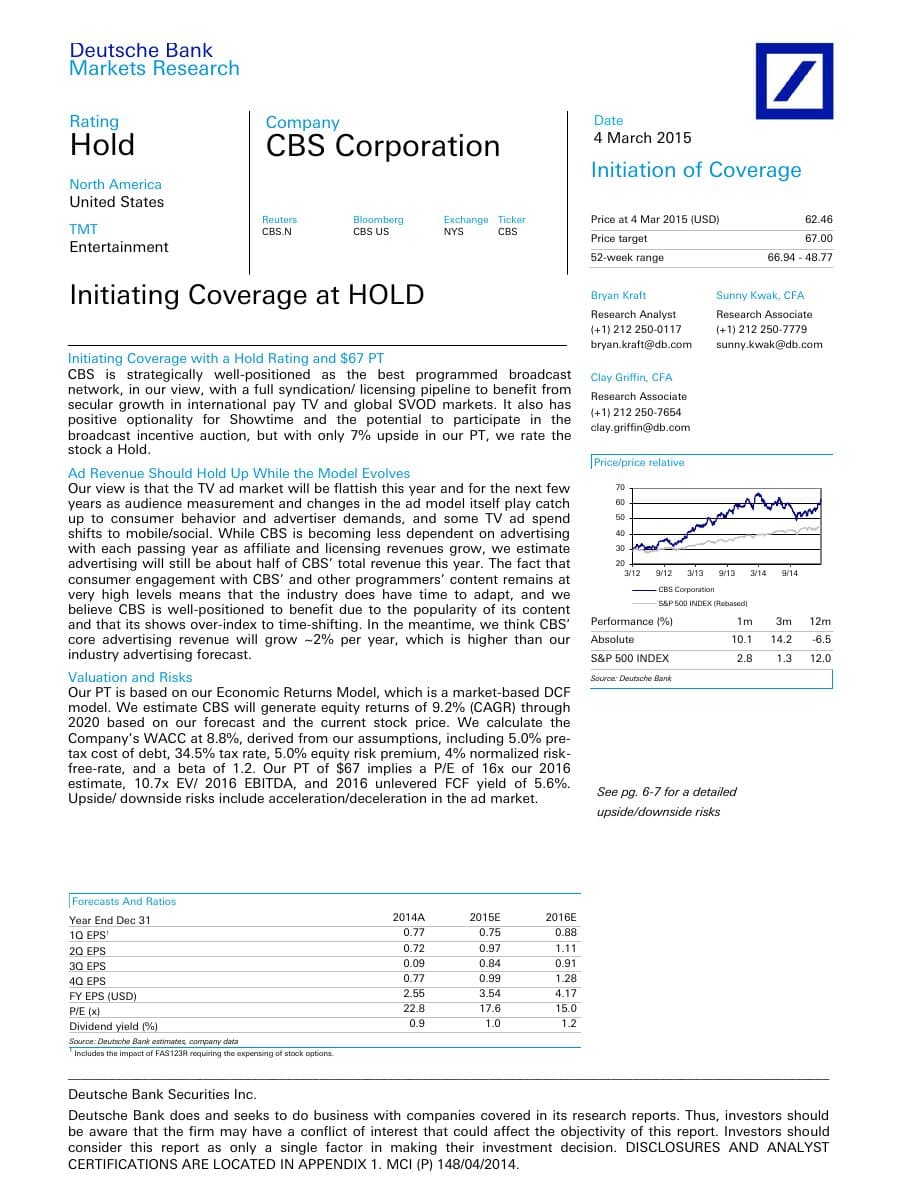
- CBSDeutsche BankHow the same valuation framework yields a Hold when upside to target is only 7%, and how ad exposure caps a broadcaster's multiple.Initiation of coverage · March 4, 2015 · 16 pagesTarget USD 67.00
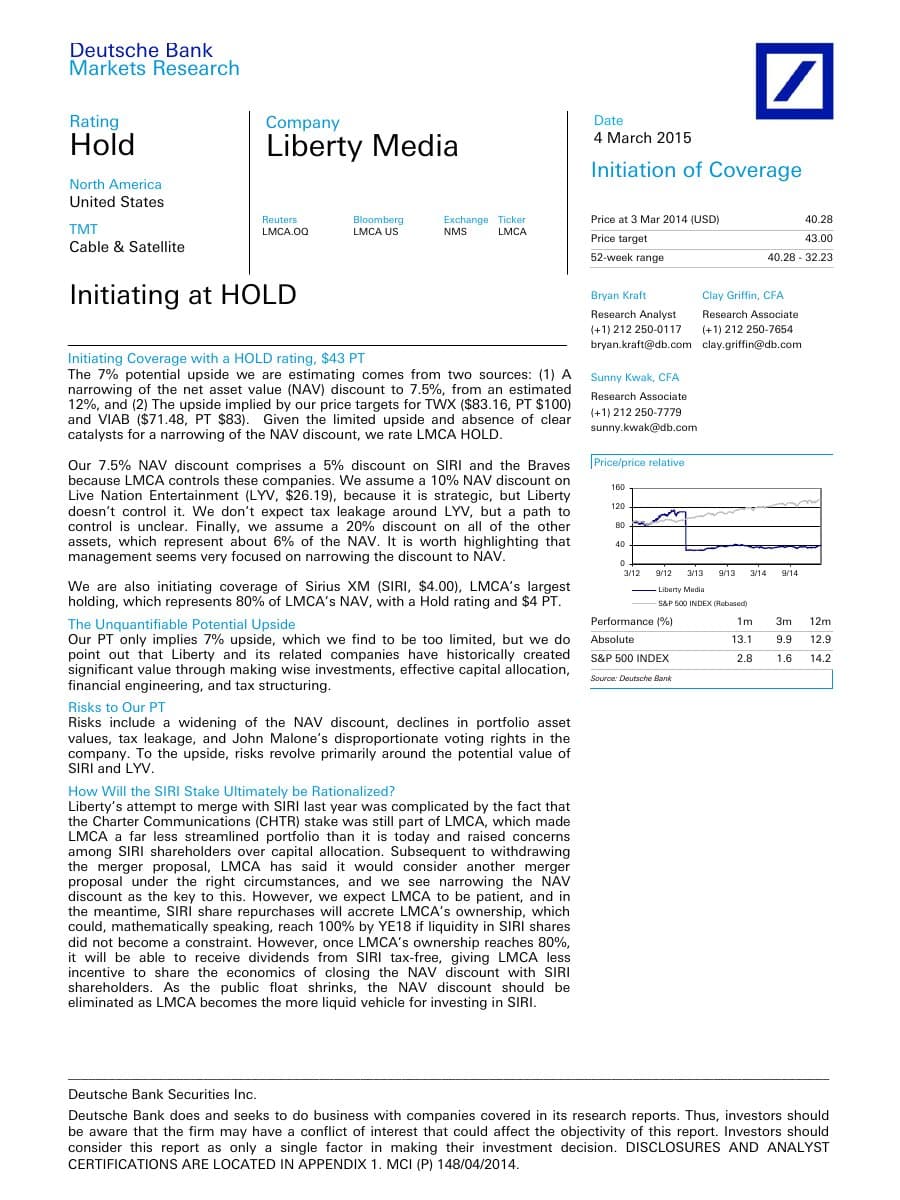
- Liberty MediaDeutsche BankHow to value a holding company by summing its stakes at a discount to net asset value based on control and liquidity.Initiation of coverage · March 4, 2015 · 11 pagesTarget USD 43.00
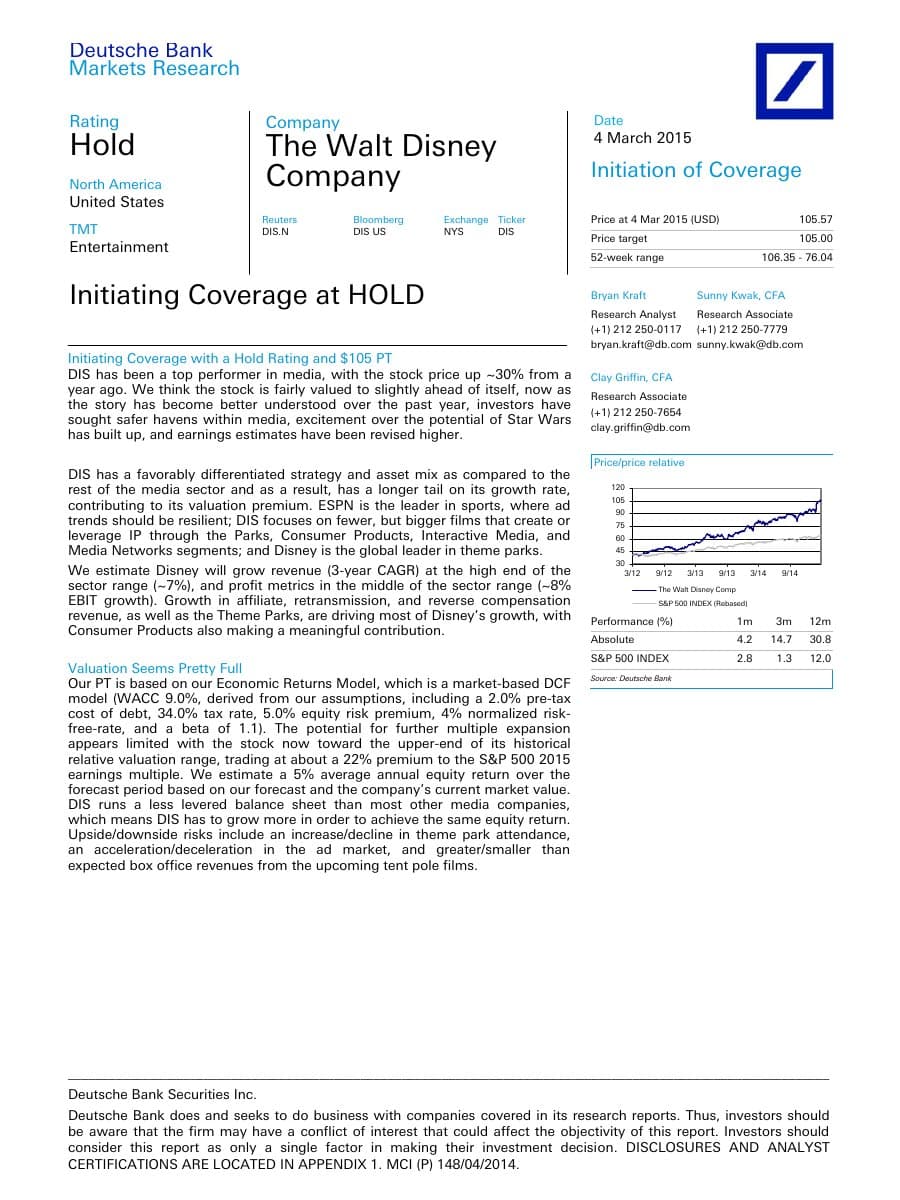
- Walt DisneyDeutsche BankWhy a great company can still be a Hold: separating business quality from valuation and expected equity return.Initiation of coverage · March 4, 2015 · 18 pagesTarget USD 105.00
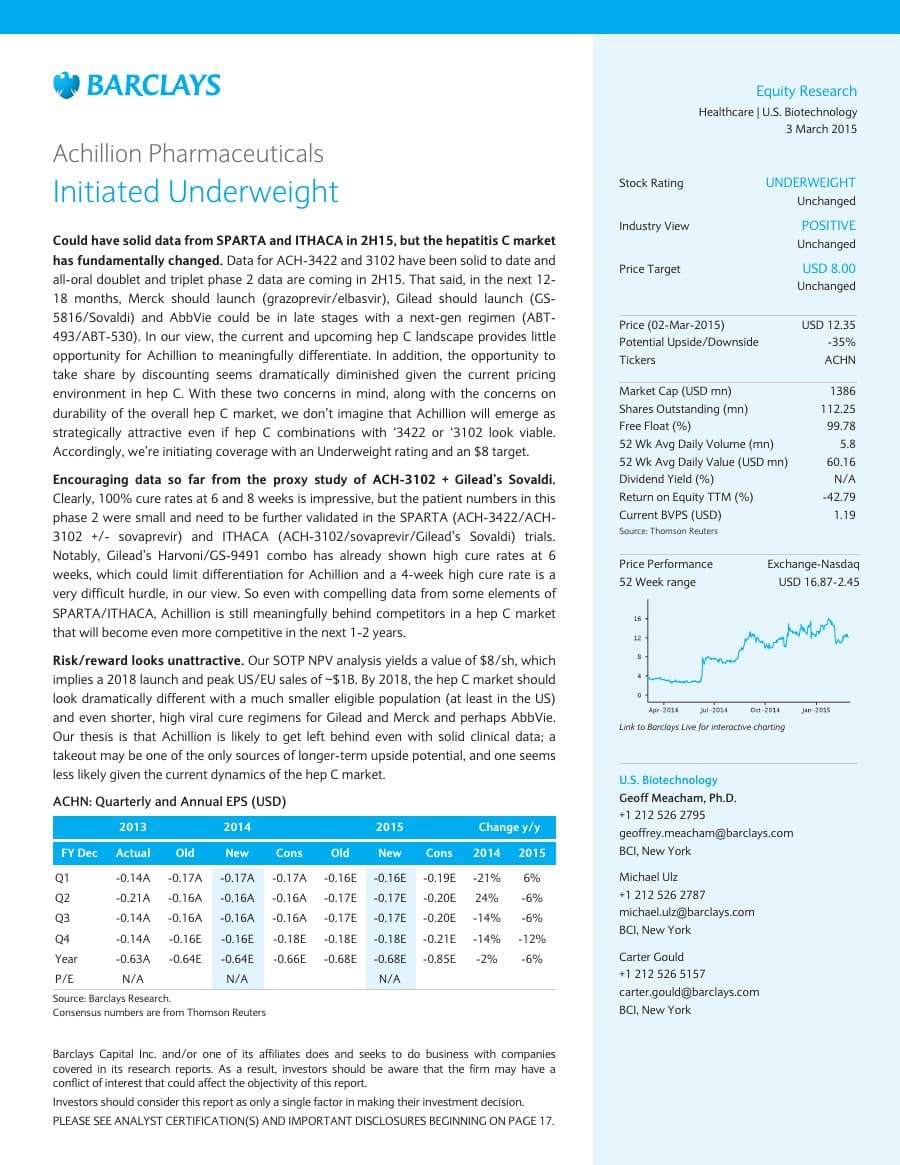
- Achillion PharmaceuticalsBarclaysHow a biotech analyst values a pre-revenue drug pipeline with a risk-adjusted NPV sum-of-the-parts and a competitive launch timeline.Initiation of coverage · March 3, 2015 · 23 pagesTarget USD 8.00
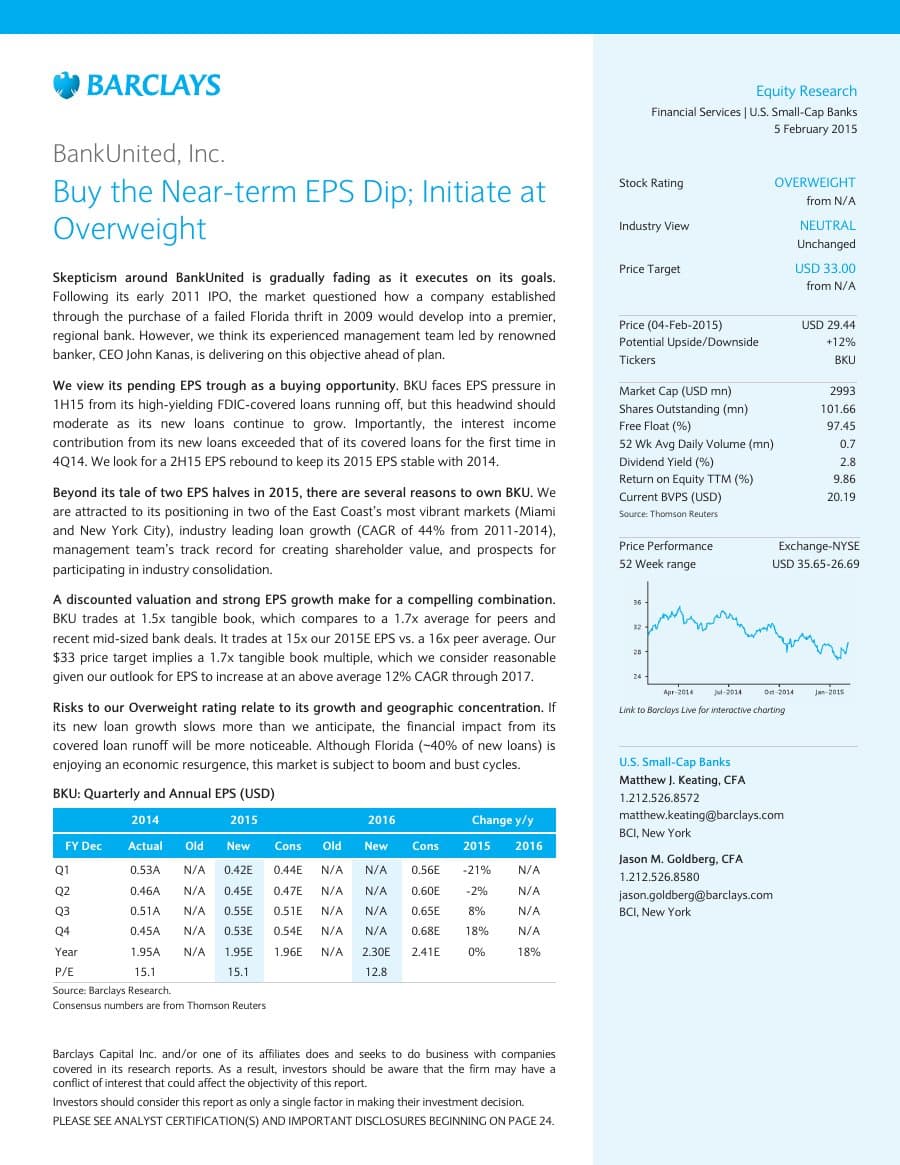
- BankUnitedBarclaysWhy banks are valued on price-to-tangible-book versus peers and recent deals, and how loan runoff creates an EPS trough.Initiation of coverage · February 5, 2015 · 30 pagesTarget USD 33.00
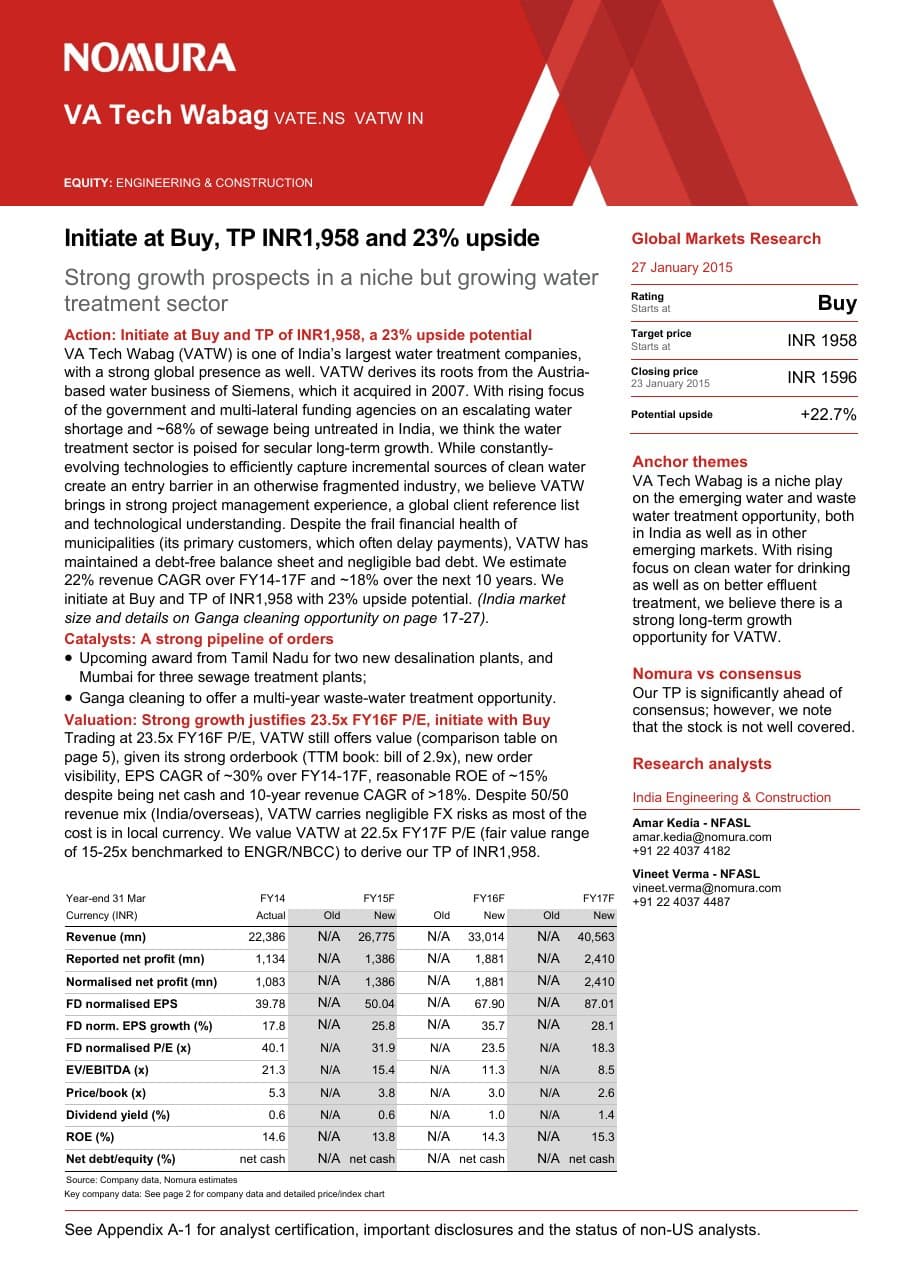
- VA Tech WabagNomuraHow to size a top-down market opportunity (national water infrastructure) and choose a P/E benchmark when a company lacks direct listed peers.Initiation of coverage · January 27, 2015 · 42 pagesTarget INR 1,958
- Australian Aged CareDeutsche BankHow a sector initiation models demographics and government funding before comparing three operators on the same DCF framework.Sector initiation · January 23, 2015 · 126 pagesTarget AUD 5.90 Estia, 4.50 Regis, 2.12 Japara
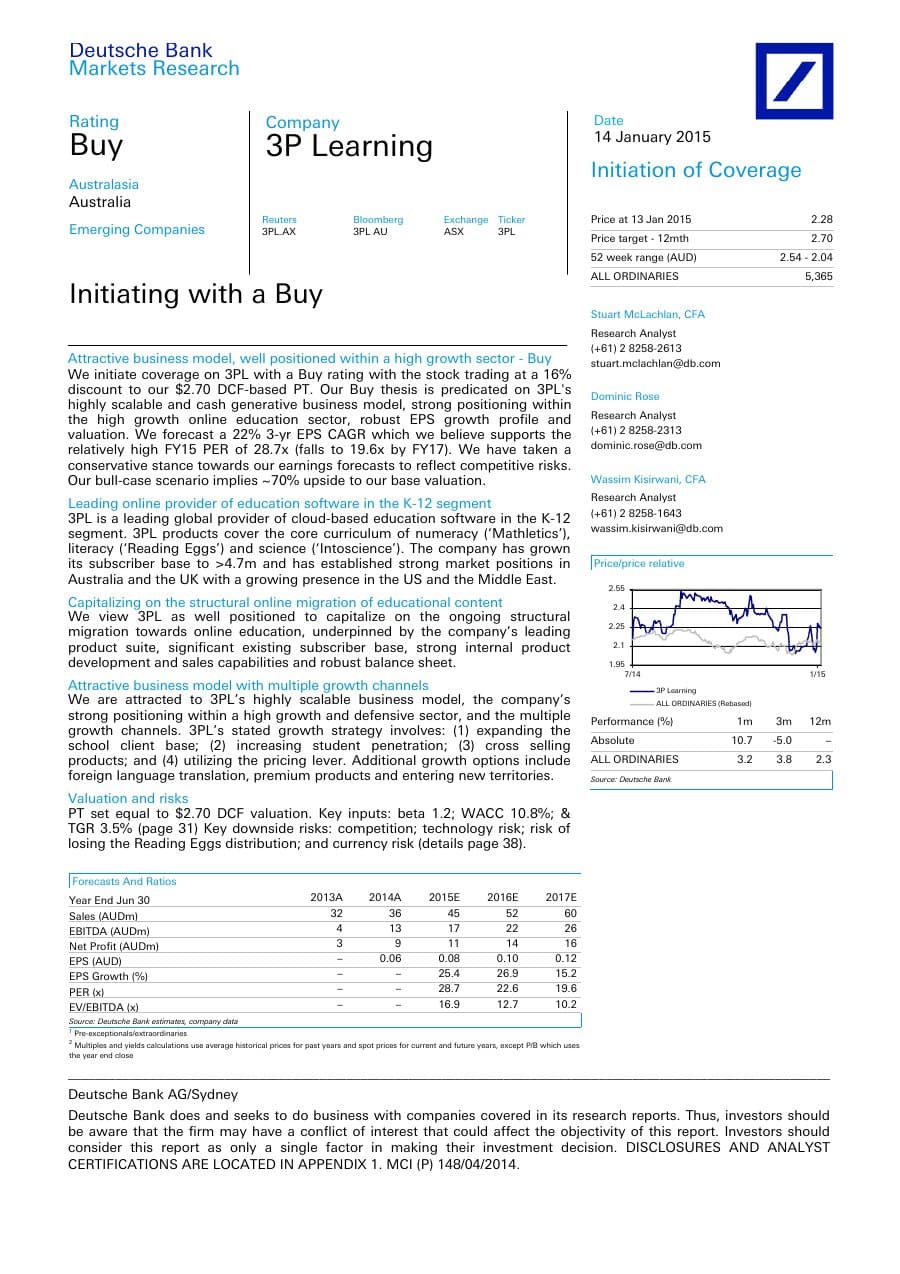
- 3P LearningDeutsche BankHow to value a recently listed subscription software company with a DCF, then stress-test it with bull and bear scenarios.Initiation of coverage · January 14, 2015 · 44 pagesTarget AUD 2.70
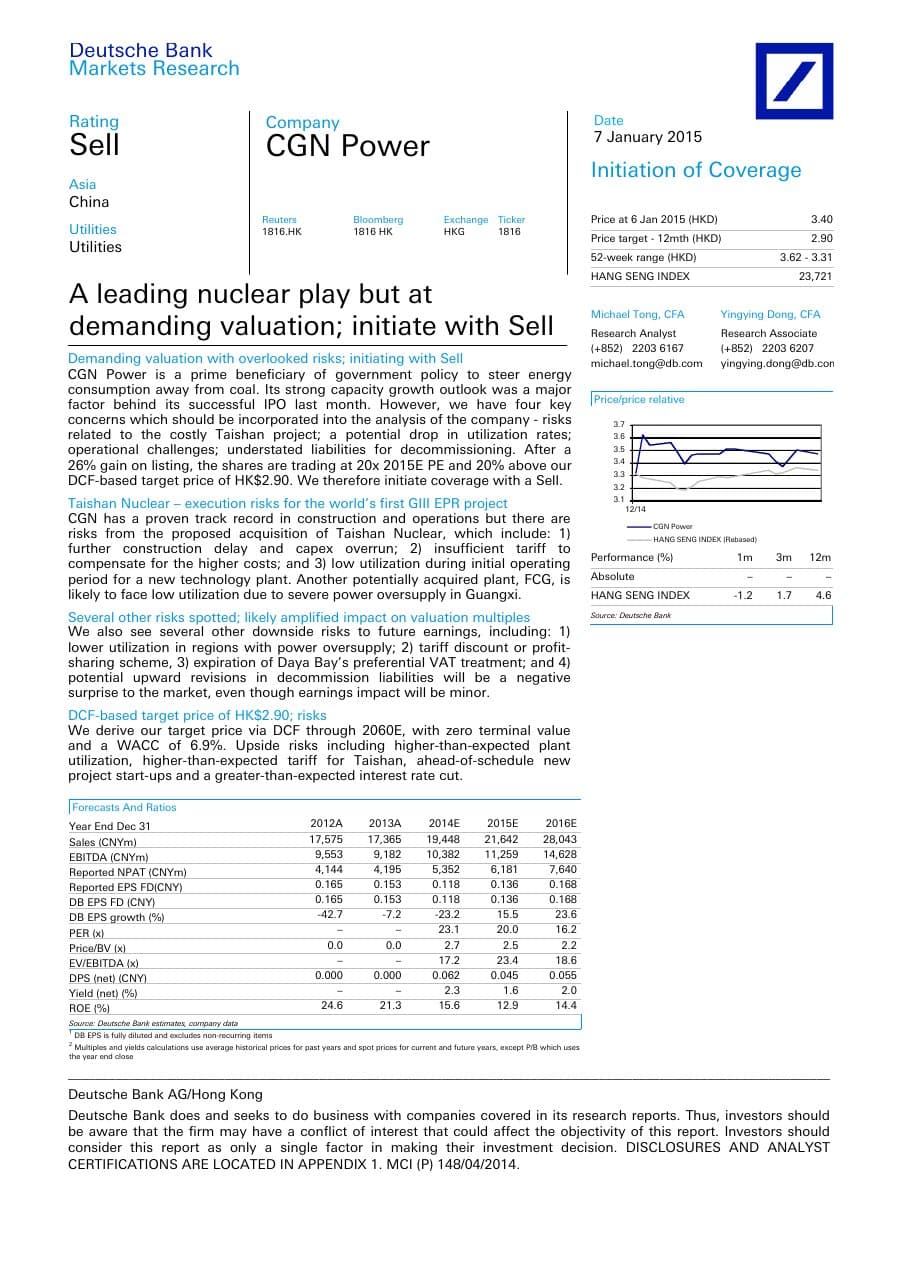
- CGN PowerDeutsche BankHow to build a life-of-asset DCF with no terminal value for a utility, and how to argue Sell on a well-liked IPO.Initiation of coverage · January 7, 2015 · 55 pagesTarget HKD 2.90
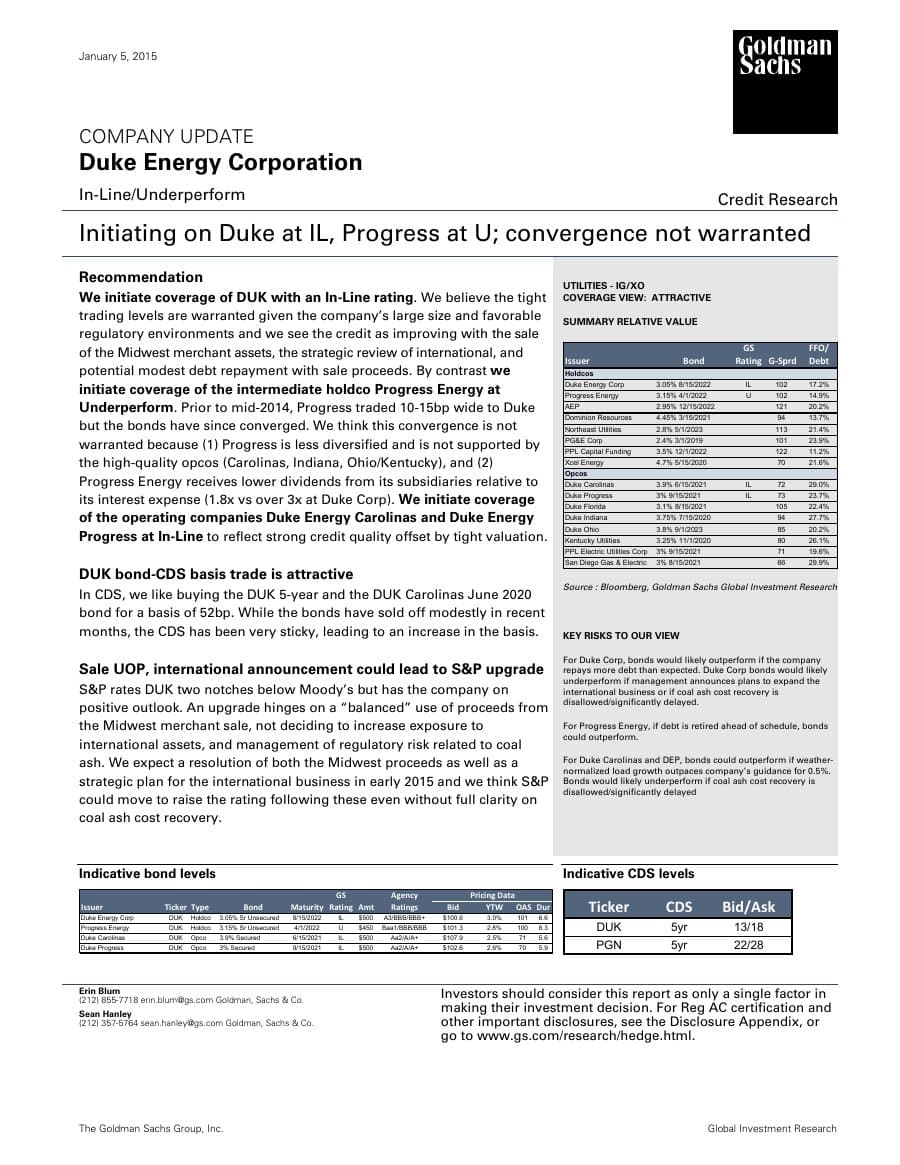
- Duke EnergyGoldman SachsHow credit analysts compare holdco and opco bonds on g-spread and FFO/debt, and spot a bond-CDS basis trade.Credit initiation · January 5, 2015 · 17 pagesUtilities credit
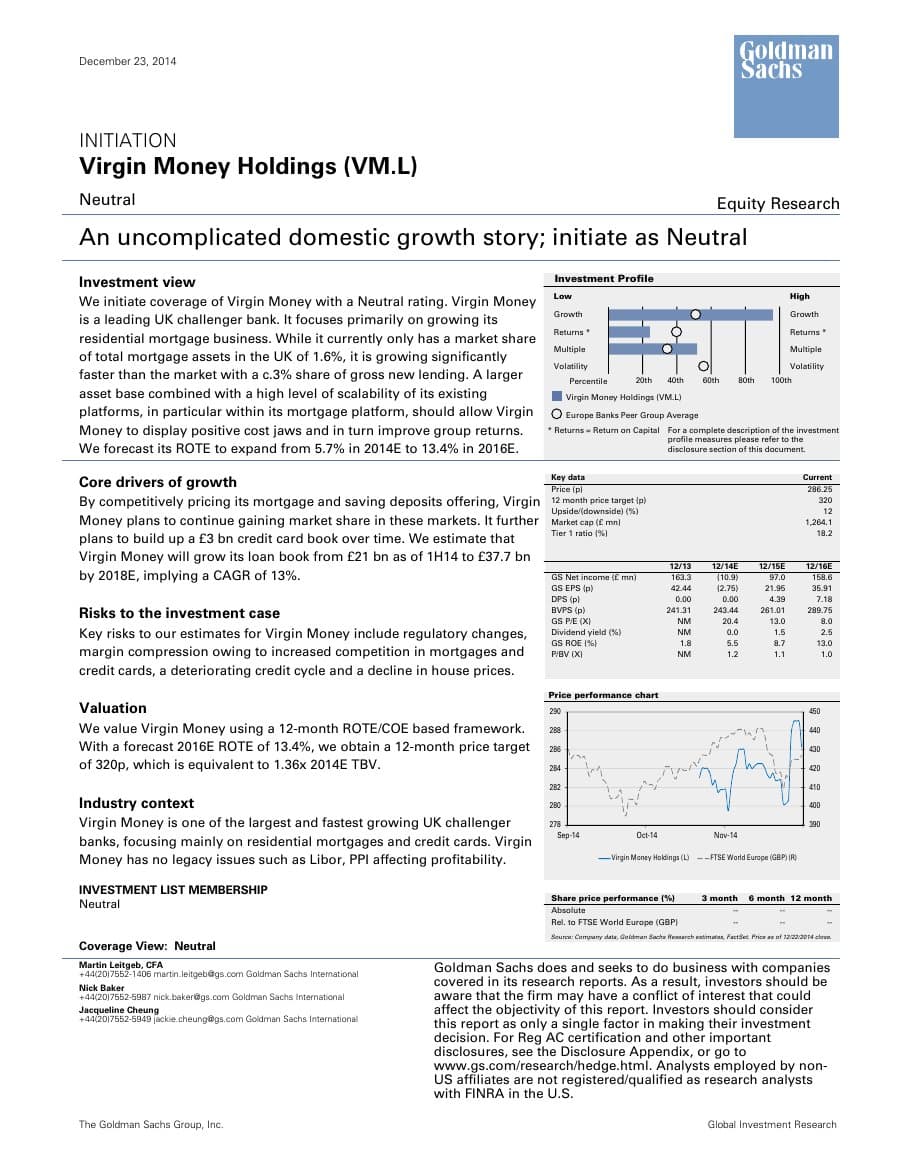
- Virgin Money HoldingsGoldman SachsHow bank analysts turn a return-on-tangible-equity forecast into a price-to-book multiple via the ROTE/COE framework.Initiation of coverage · December 23, 2014 · 44 pagesTarget 320p
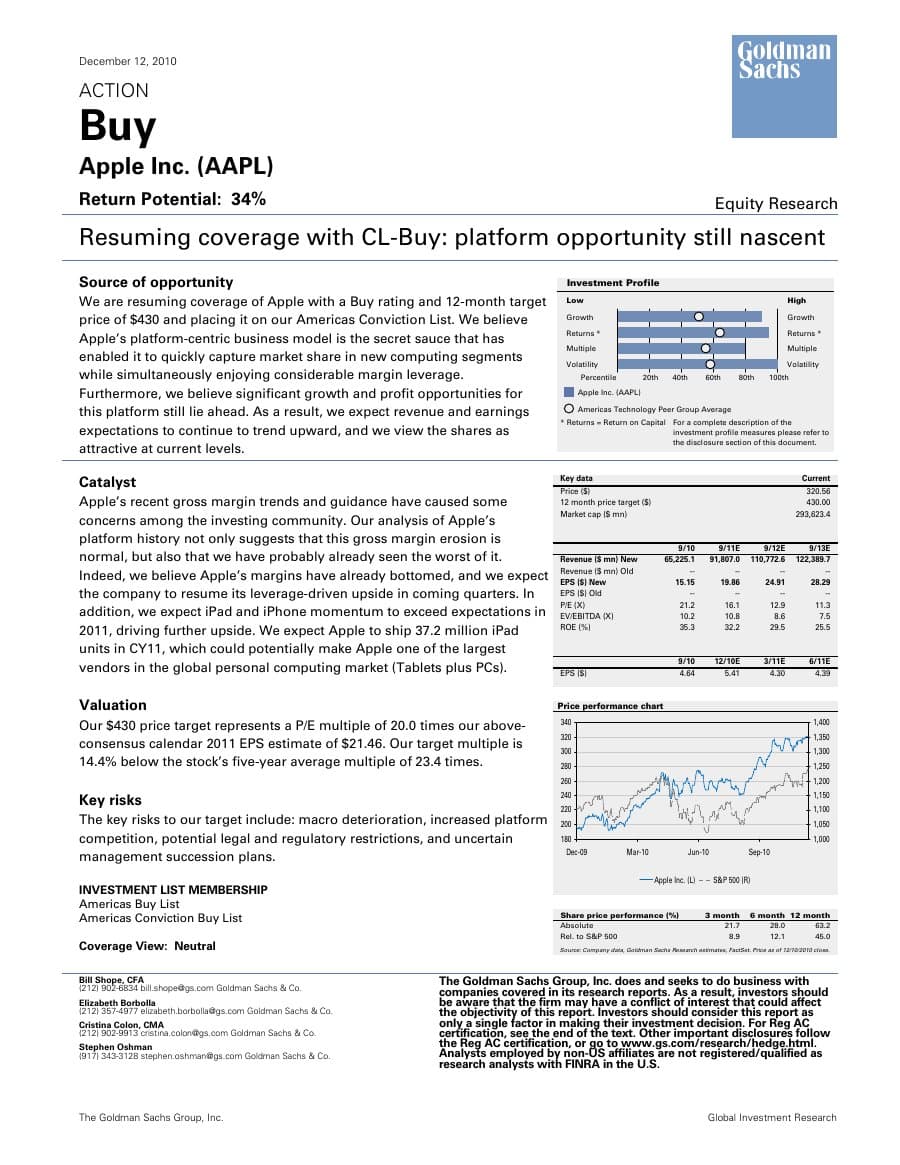
- AppleGoldman SachsHow to anchor a P/E target multiple to a stock's own history and defend it with a DCF and peer comparison.Initiation of coverage · December 12, 2010 · 59 pagesTarget USD 430.00
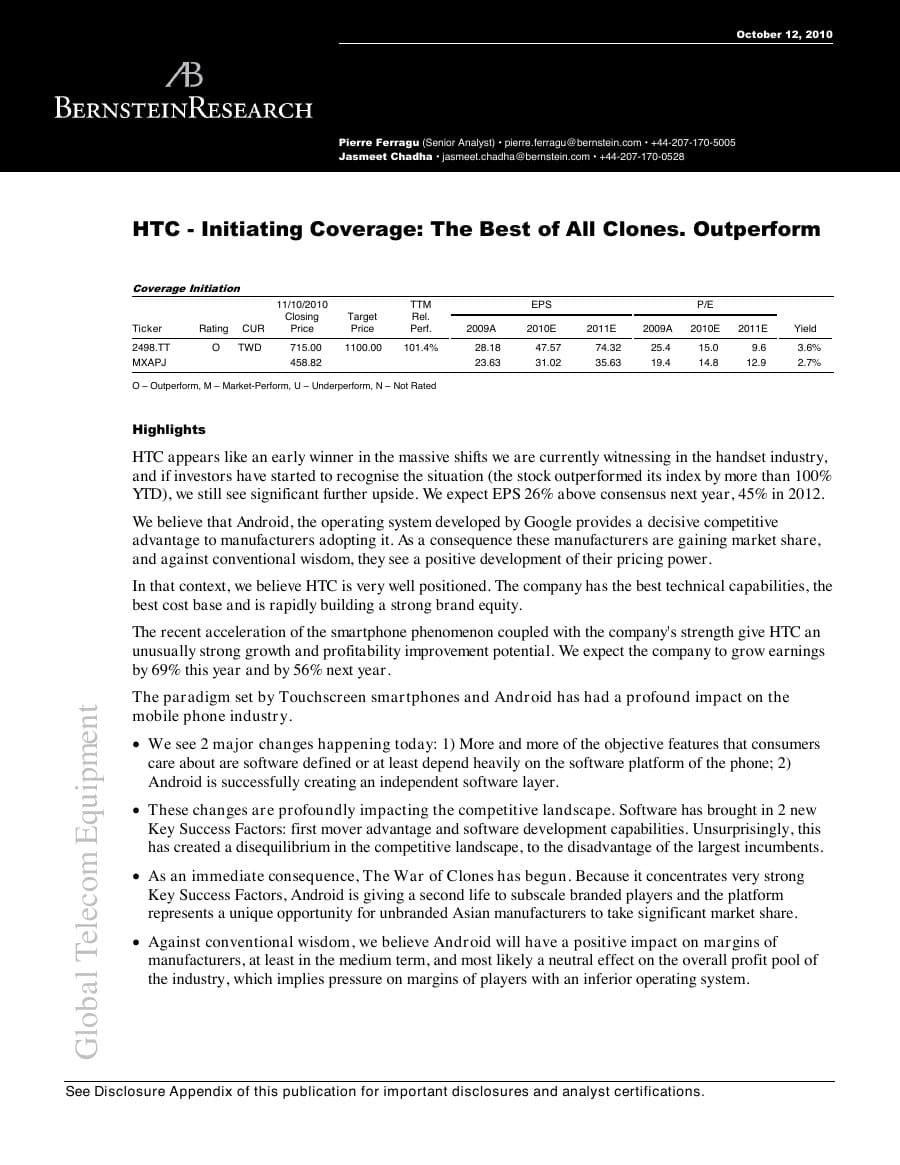
- HTCBernsteinHow to build a differentiated earnings call from an industry-structure thesis, then size it against consensus.Initiation of coverage · October 12, 2010 · 50 pagesTarget TWD 1,100

Update notes
3 reportsShort notes written on existing coverage after results or an event. They assume you know the company already and go straight to what moved in the estimates.
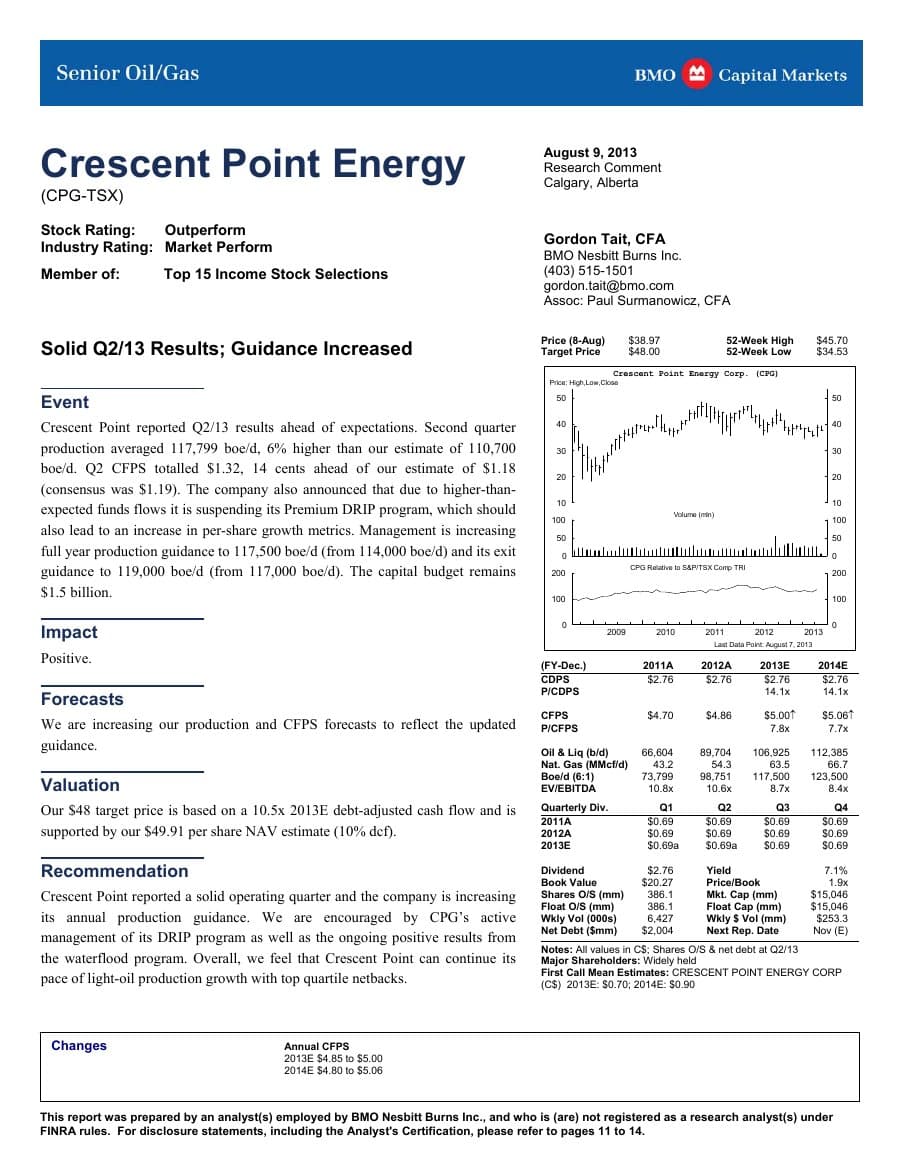
- Crescent Point EnergyBMO Capital MarketsHow E&P analysts value a dividend-paying producer on debt-adjusted cash flow multiples cross-checked against a reserves-based NAV.Update note · August 9, 2013 · 14 pagesTarget CAD 48.00
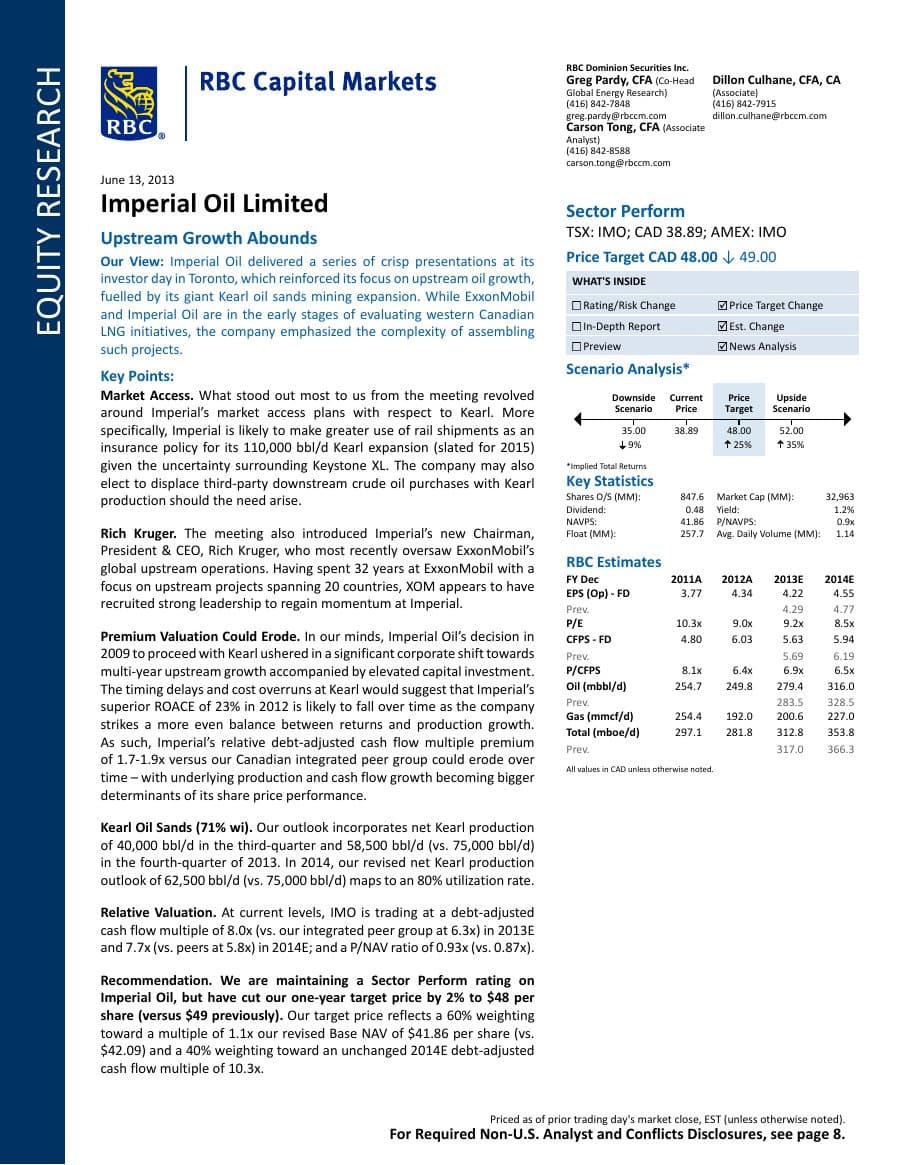
- Imperial OilRBC Capital MarketsHow a short post-event note blends a NAV and a cash flow multiple, and lays out upside and downside scenarios.Update note · June 13, 2013 · 11 pagesTarget CAD 48.00
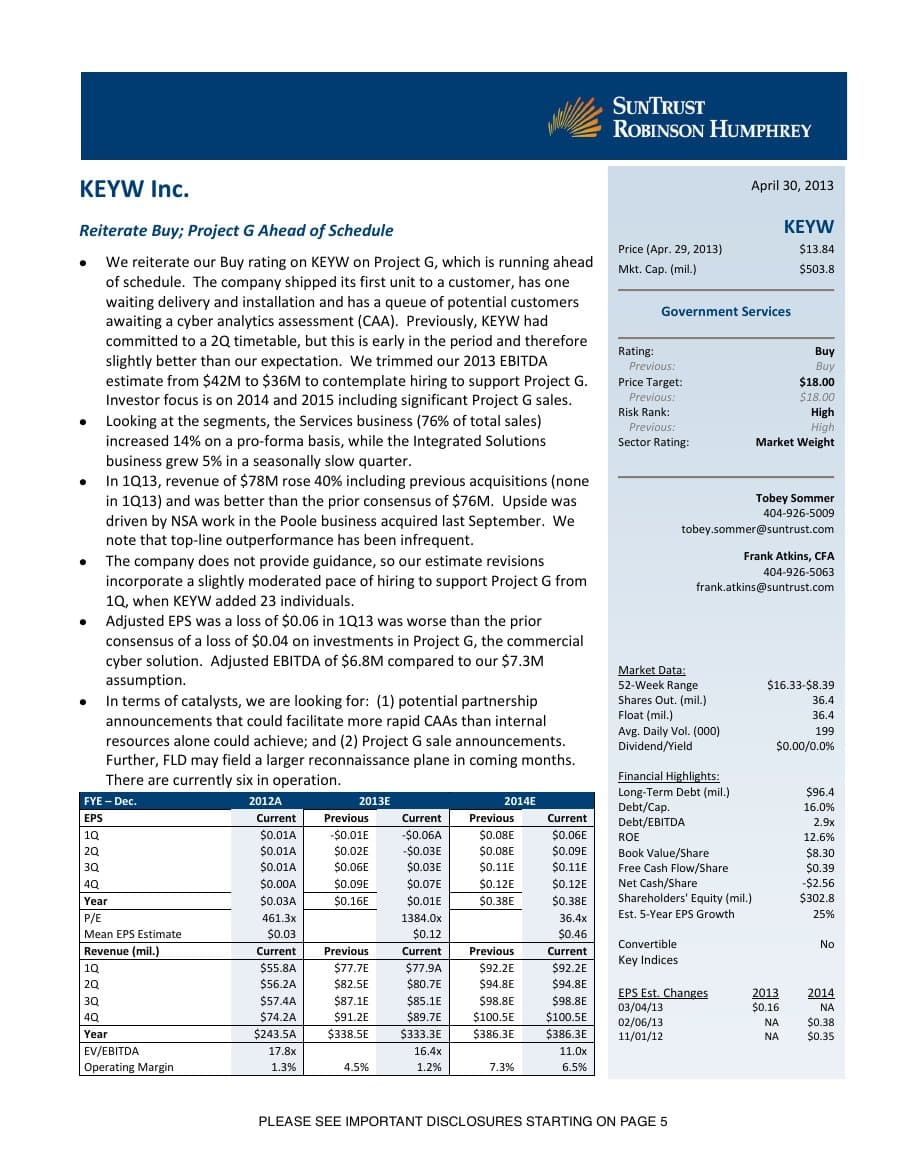
- KEYWSunTrust Robinson HumphreyHow an earnings update separates a near-term estimate cut from an unchanged thesis, and values a small-cap on forward EV/EBITDA.Update note · April 30, 2013 · 7 pagesTarget USD 18.00
Where to find current reports
Banks publish research for their institutional clients, so the newest reports are rarely free on the open web. Two routes usually work. Most university libraries subscribe to databases that carry sell-side research, and students can read current reports there at no cost. Many retail brokerages also give account holders third-party research on the stocks they hold.
Every report here was written and published by the bank named on its cover and is hosted for educational use. The views, estimates, and price targets are the analysts’ at the time of publication, and all of the reports are more than a decade old.
