Overview
Overview
Working on an M&A deal means balancing financial analysis, tight deadlines and constant changes from the client and senior bankers. Over the course of a deal, analysts and associates may build LBO and DCF models, research comparable companies and transactions, prepare valuation materials, and revise everything as new information comes in.
A typical week can move quickly. One day might be spent building a model from scratch, while the next involves changing assumptions based on a client call or preparing a presentation for senior management. The work is detailed, but the overall process follows a fairly clear pattern.
TL;DR
- Groundwork - Gather the company’s financials, understand the deal and set up the initial valuation work.
- Modeling - Add management projections, test different assumptions, and build out the LBO and DCF.
- Valuation - Use trading comps and transaction comps alongside the models to establish a range of possible values.
- Client feedback - Update the analysis as management changes assumptions or provides new information.
- Execution - As the deadline gets closer, the team works through revisions, checks the numbers and prepares the final presentation.
1. Laying the Groundwork for a Major M&A Transaction
An M&A deal often starts with a relatively simple question - is the company considering a sale, an acquisition or another strategic transaction?
Once the work begins, the banking team needs to understand the company, the potential buyers and what the transaction could look like. Analysts usually start by gathering historical financials, market data, company filings and any information provided by the client. Previous models may also be used as a starting point, but every deal has its own assumptions and requirements.
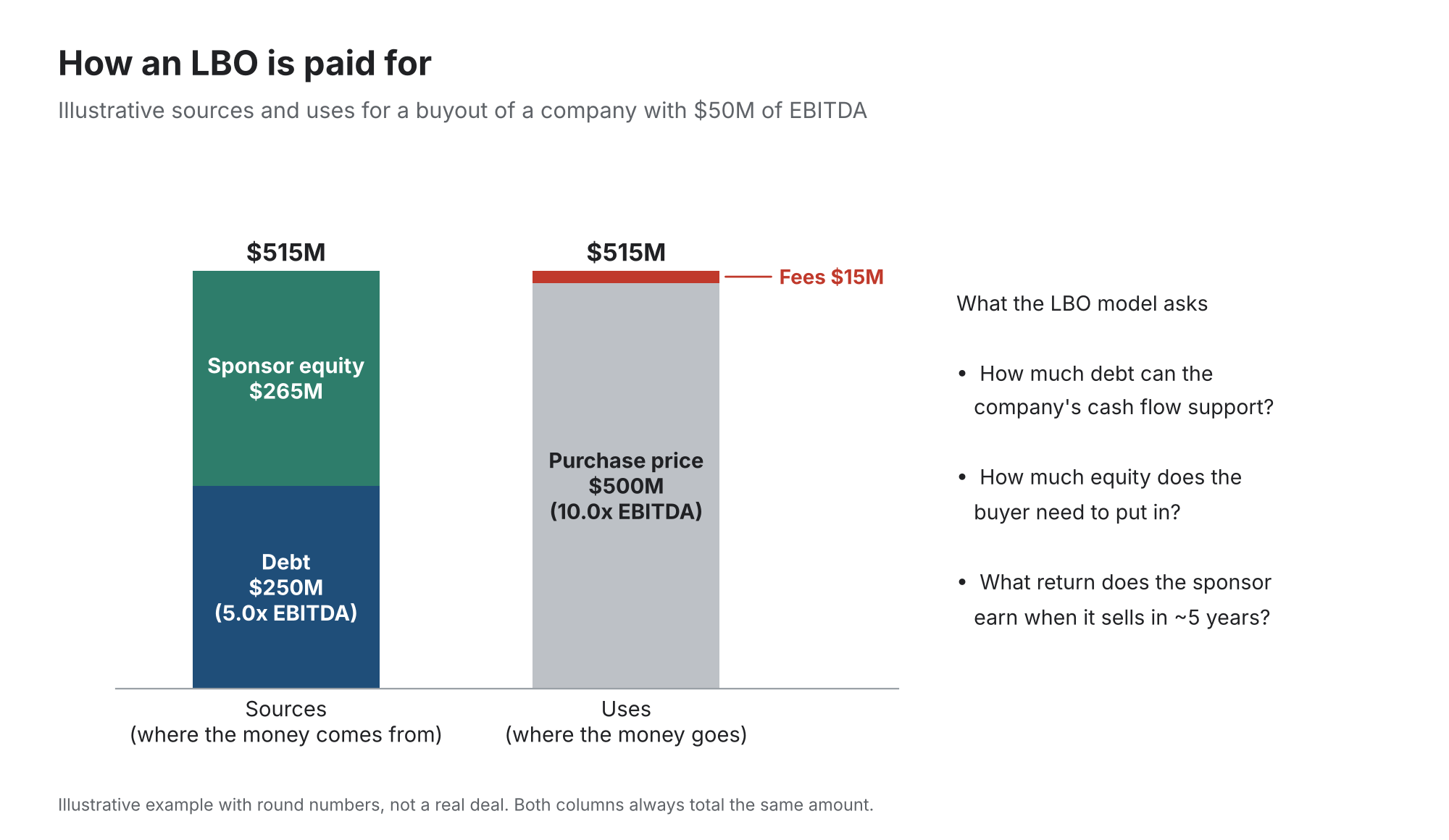
If private equity buyers are involved, an LBO model is often an important part of the analysis. The model helps estimate how much debt and equity could be used to finance a potential acquisition and what returns a financial sponsor might generate.
At this stage, the goal is not to have a perfect answer. It is to build a solid starting point and make sure the team understands what needs to be analyzed.
2. Integrating Client Projections into Financial Models
Once the basic model is in place, the team starts incorporating the company’s own forecasts.
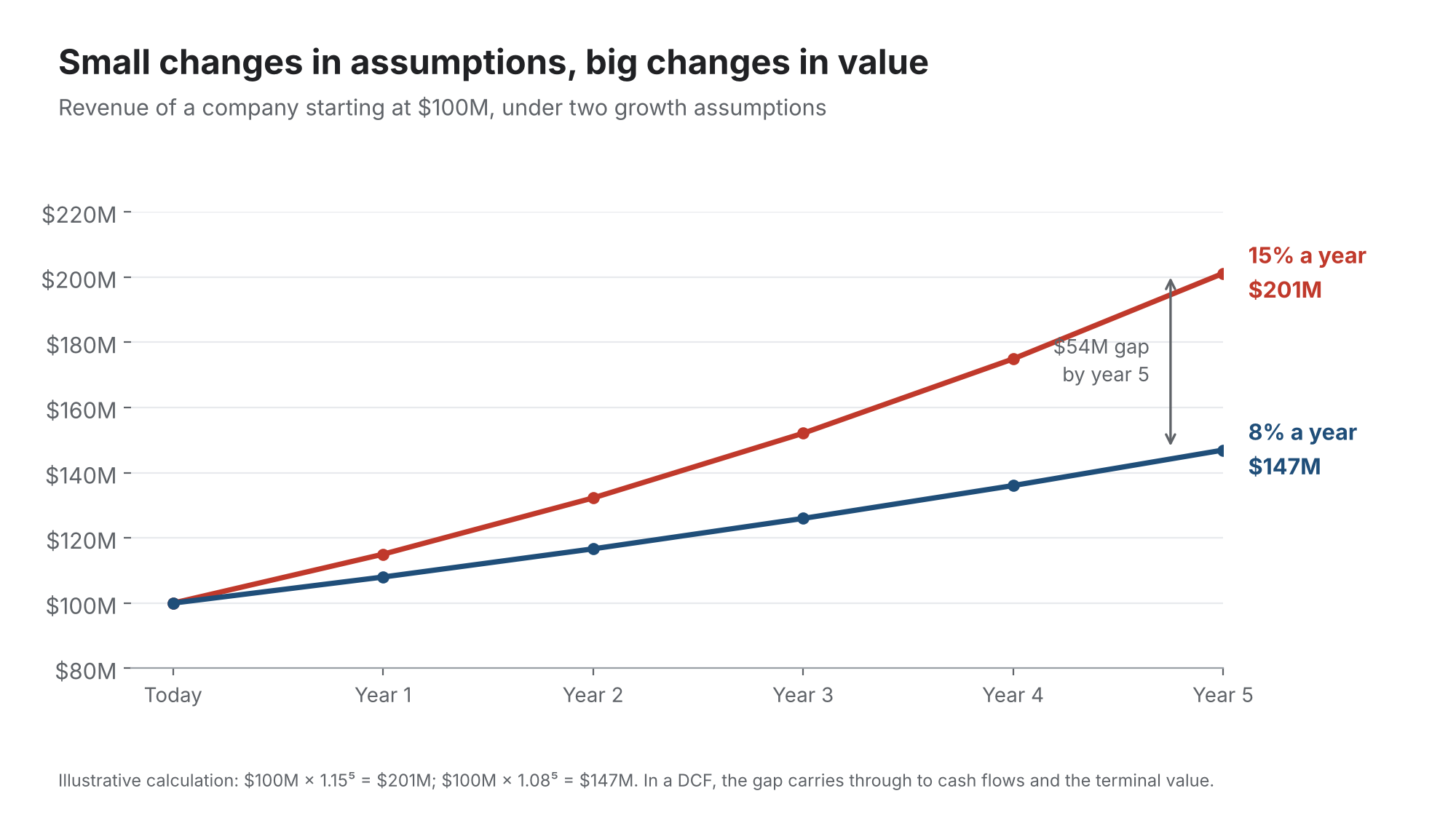
Management projections usually cover things like revenue growth, operating expenses, margins, capital expenditures and other key financial assumptions. The banking team reviews these numbers carefully because the valuation can change significantly depending on what assumptions are used.
For example, a company projecting 15% annual revenue growth will produce a very different valuation from one growing at 8%. Analysts therefore look at different cases rather than relying on a single forecast. A base case might use management’s expectations, while more conservative or optimistic cases show what happens if the assumptions change.
The team may also build or refine a DCF at this point. A DCF estimates the value of the business based on its expected future cash flows and a terminal value. The discount rate is then used to bring those future amounts back to their value today.
3. Coordinating Multiple Valuation Methods for Clarity
An M&A valuation rarely relies on just one method. Alongside the LBO and DCF, bankers will usually look at comparable companies and recent transactions in the same industry.
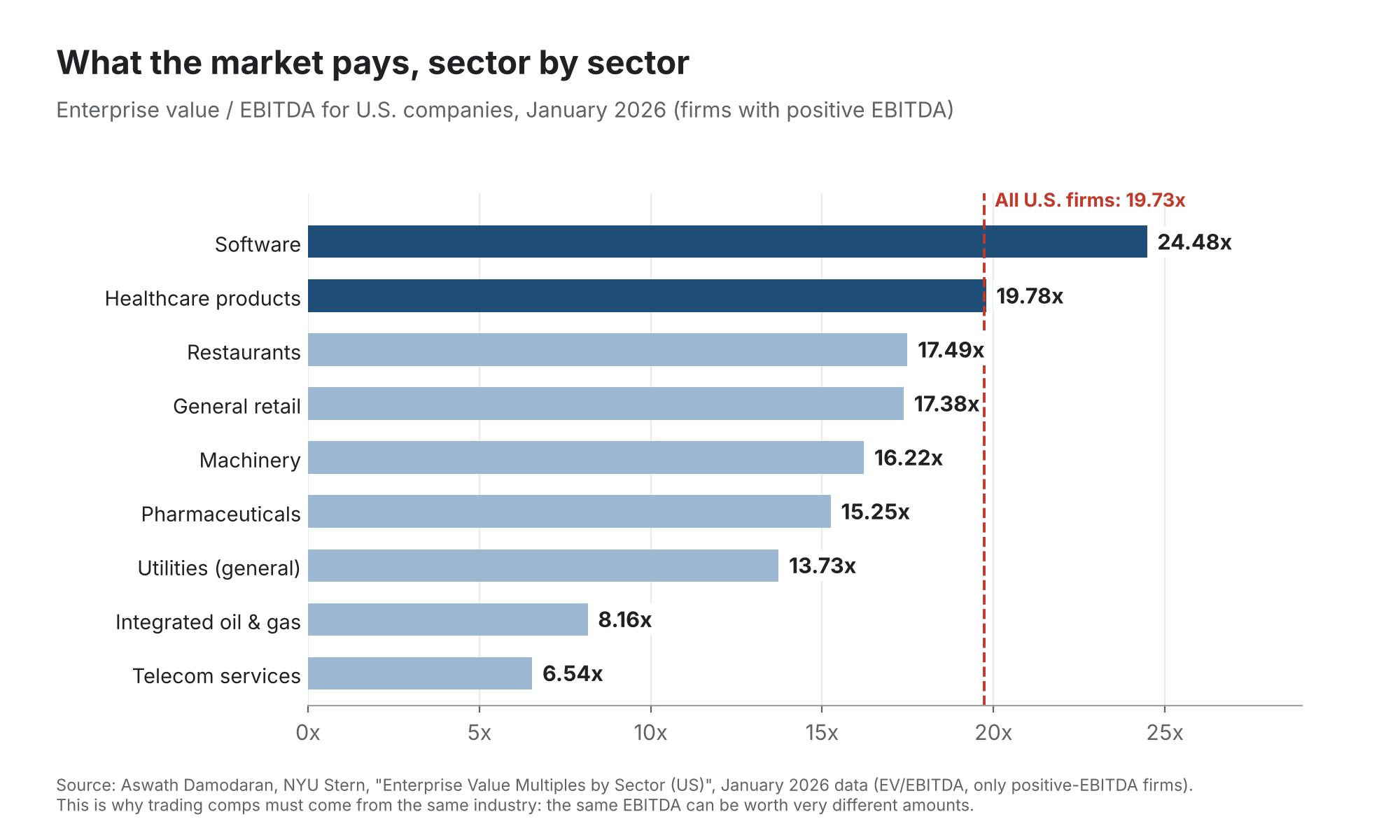
Trading comps compare the company with similar publicly traded businesses. The team looks at metrics such as enterprise value, revenue, EBITDA and other relevant multiples to understand how the market is valuing similar companies.
Transaction comps take a similar approach but focus on companies that have recently been bought or sold. These can be useful because they show what buyers have actually been willing to pay in recent M&A transactions.
Finding the right comparables takes time. Analysts may need to review company filings, earnings releases, investor presentations, and announcements about recent deals before deciding which companies or transactions are relevant.
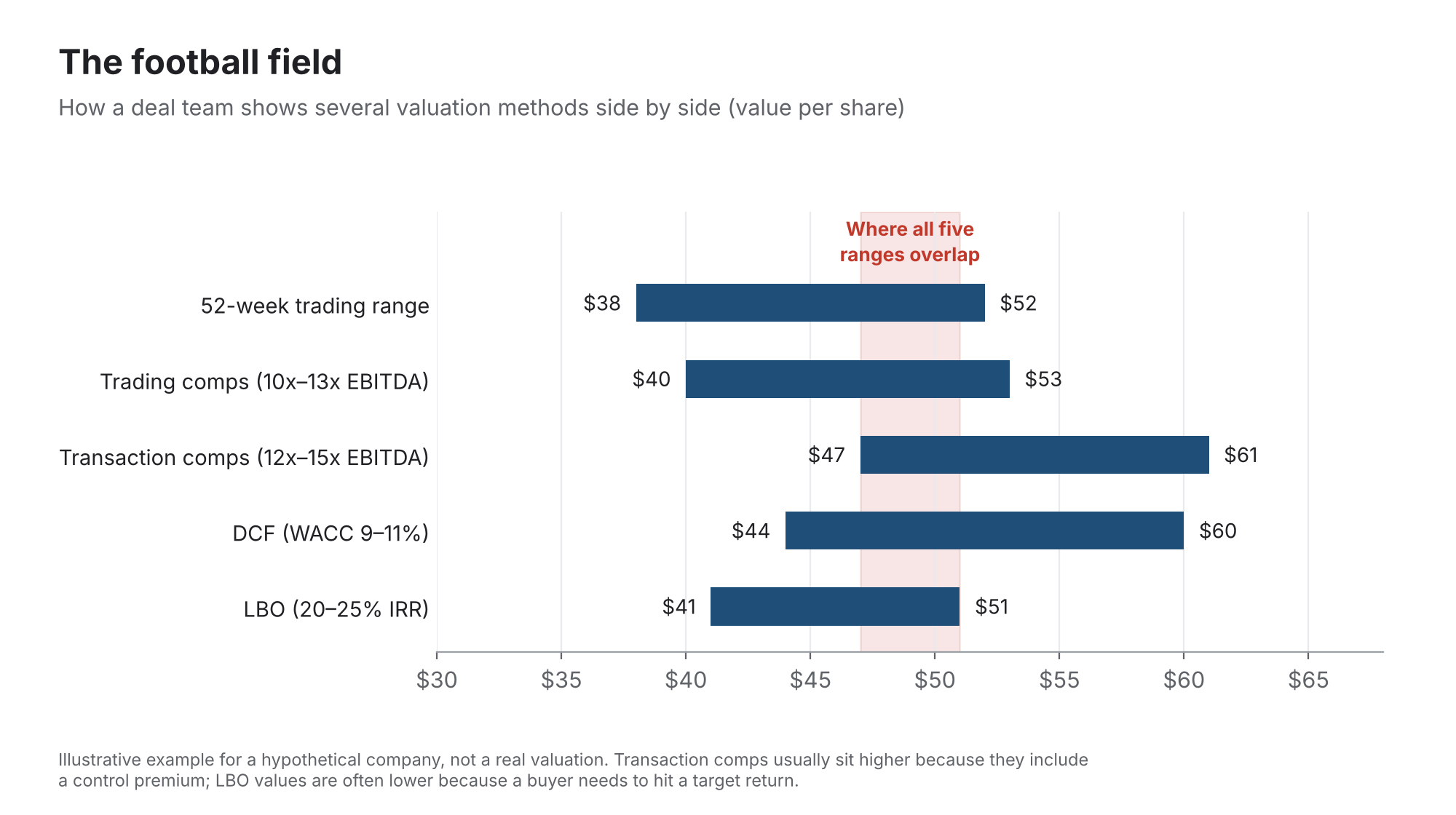
The results are then brought together into a valuation summary. One common way of showing this is a football field chart, which puts the valuation ranges from different methods side by side.
4. Aligning with Stakeholders to Finalize Strategy
The analysis does not happen in isolation. Once the initial valuation work is ready, the banking team discusses it with the client and senior bankers.
These conversations can change the direction of the analysis. Management may believe that revenue will grow faster than the initial forecast, provide new information about costs or point out a strategic opportunity that was not included in the original model.
The team then goes back into the analysis and updates the relevant assumptions. This is one of the reasons M&A work can feel unpredictable. The model may look finished in the afternoon and need significant changes after a client call that evening.
Senior bankers also use these discussions to think about the broader transaction strategy, including potential buyers, the positioning of the company and how the deal should be presented.
5. Managing Late-Night Revisions and Quality Checks
As the transaction moves forward, deadlines become more important and the pace usually picks up.
A new assumption might require changes across several parts of the model. If revenue forecasts change, the impact may flow through the income statement, cash flow, valuation and presentation materials. The team needs to make sure that all of these pieces remain consistent.
This is where quality control becomes especially important. Analysts and associates check formulas, links, assumptions, formatting and outputs before materials go to senior bankers or the client. A small error in a model can affect several parts of the analysis, so these checks are not just about presentation.
Late-night work is common when a client meeting or presentation is scheduled for the next morning. The team may receive new information in the evening, make the required changes and then spend additional time checking the updated materials.
6. Presenting the Initial Pitch and Handling Feedback
After the analysis is complete, the team brings everything together into a presentation for the client.
A typical M&A presentation may include:
- An overview of the company or asset
- An explanation of the valuation methods used
- Financial forecasts under different scenarios
- Trading and transaction comparables
- A football field showing the valuation ranges
- Potential strategic or financial buyers, depending on the stage of the process
Senior bankers usually lead the presentation with the client’s management team. The materials may then be shared with the CFO, board or other senior executives for further discussion.
Feedback at this stage can lead to another round of changes. The client may ask for a different valuation scenario, additional buyer analysis or clarification on one of the assumptions. Once the client is comfortable with the analysis and strategy, the process can move into broader buyer outreach, negotiations or the next stage of the transaction.
The Bottom Line
An M&A deal is not just about building a financial model. The team has to bring together several valuation methods, understand the client’s business, respond to new information and turn all of that analysis into something senior management can use to make a decision.
The work can change quickly, especially as a deal gets closer to an important meeting or deadline. That is why strong M&A analysts need more than just technical modeling skills. They also need to be comfortable working through changes, checking their work carefully and understanding how the numbers fit into the broader transaction.
That combination of financial analysis, problem-solving and execution is what makes M&A work demanding, but also one of the most valuable learning experiences in investment banking.