Overview
Overview
Investment banking has a reputation for being one of the most lucrative careers in finance. The appeal is easy to understand - high pay, prestigious firms, major deals and plenty of exit options after a few years in the industry.
But there’s another side to the story.
The reality of investment banking is a mix of great opportunities and some pretty serious trade-offs. You can make a lot of money and build skills that open doors across finance but you will also find yourself working late nights, answering emails on weekends, and changing a presentation for the fifth time because a client changed their mind.
If you’re seriously considering a career in banking, it’s worth knowing both sides before you decide whether it’s right for you.
TL;DR
- Investment banking is one of the faster ways to reach a very high income early in your career.
- A few years in banking can open doors to private equity, hedge funds, corporate development and other business roles.
- The work can be demanding and your schedule is often dictated by clients and live deals.
- The prestige of working at a top bank means a lot within finance. Outside the industry, most people probably won’t know what you actually do.
- There’s also an incentive structure worth understanding. Banks make money when deals happen, which means the interests of the bank and the client aren’t always perfectly aligned.
1. The Money is Real
Let’s start with the obvious reason so many people want to get into investment banking - the money.
In the United States, earning around $675,000 a year is roughly the threshold for being in the top 1% of earners. At leading investment banks, reaching that level of compensation is possible by the time you reach Vice President, often five or six years after starting as an Analyst or Associate.
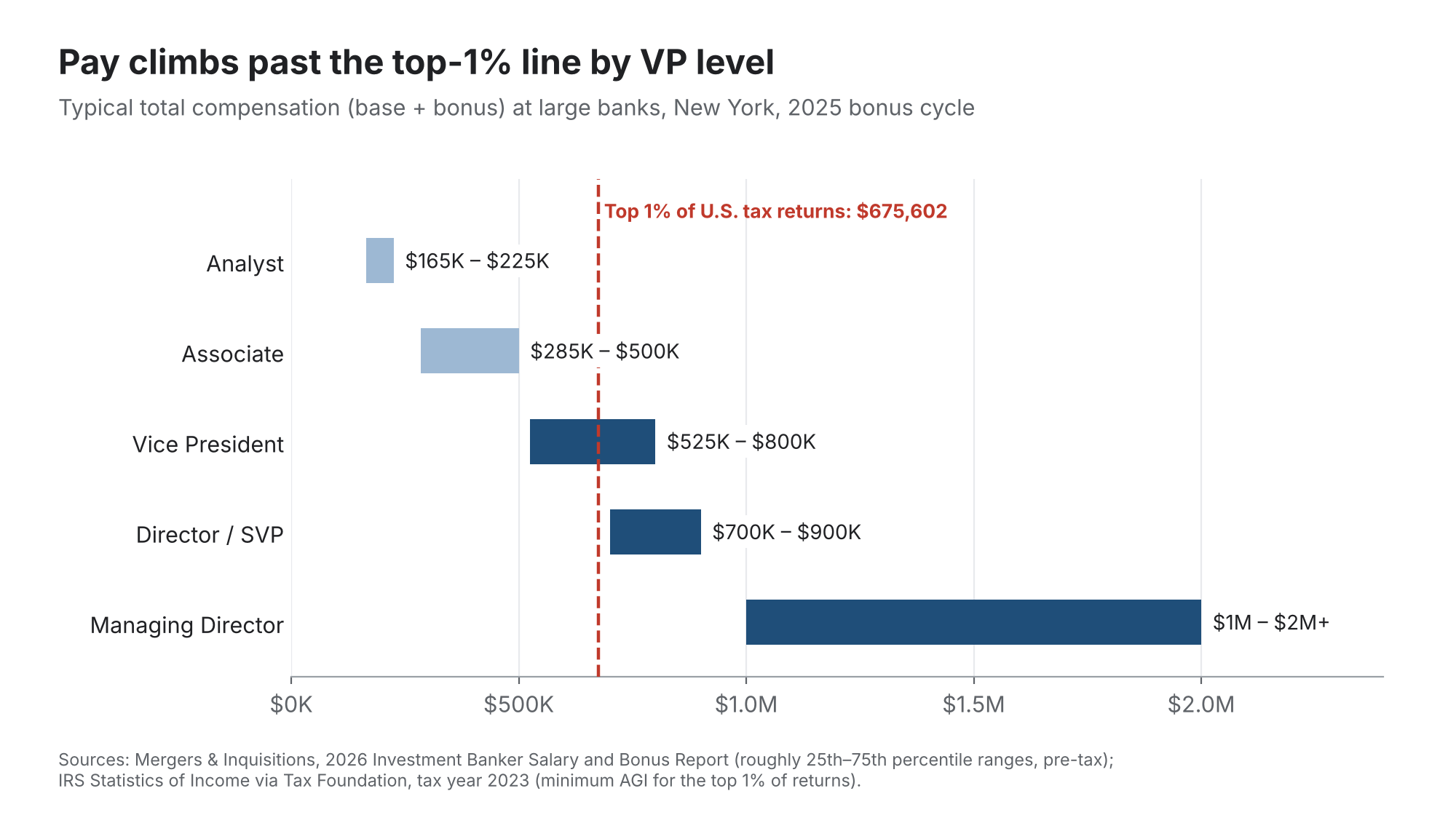
And the base salary doesn't even tell the whole story. Investment banking compensation is usually made up of a base salary plus a bonus, with the bonus becoming a meaningful part of total compensation as you move up.
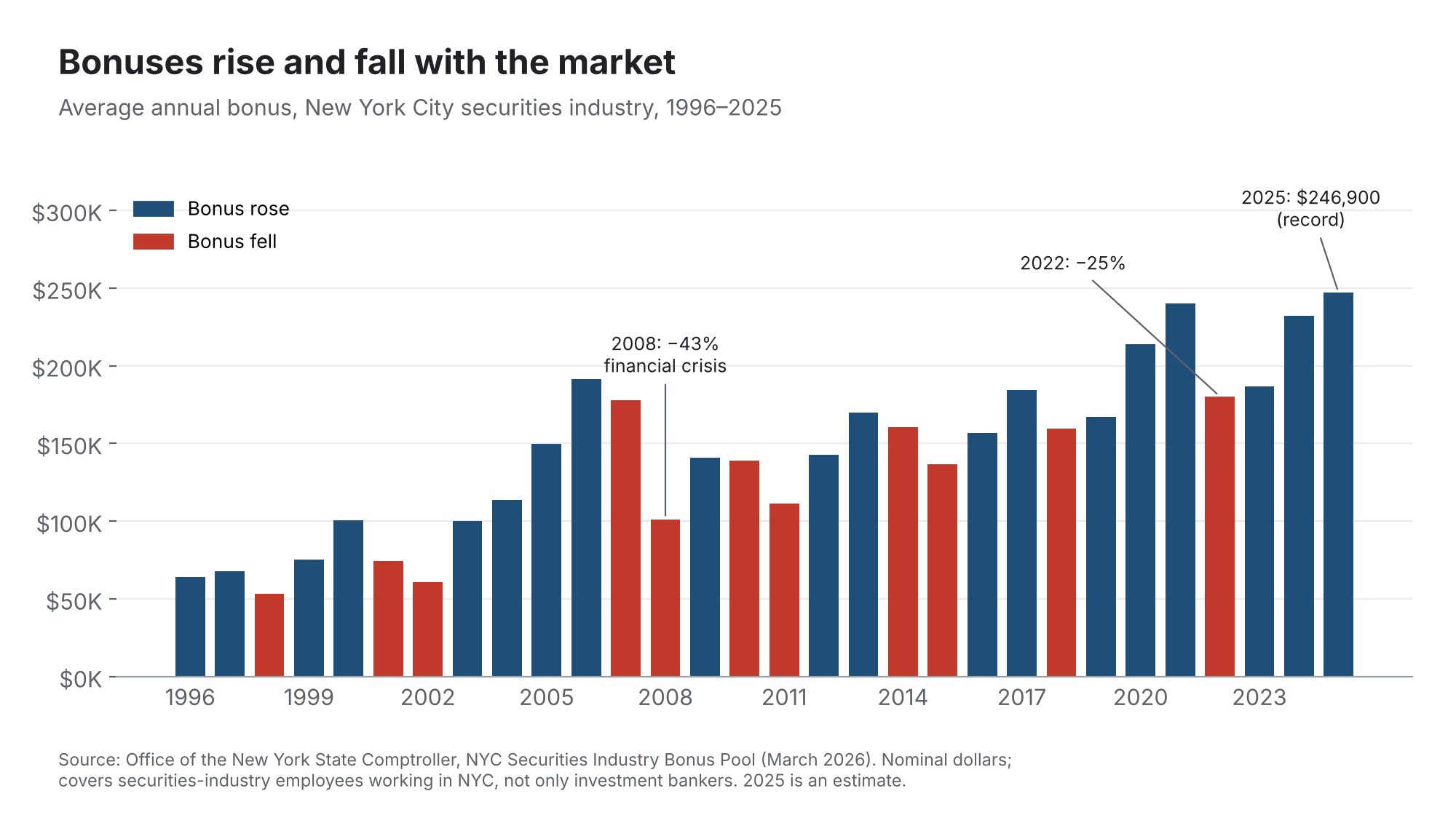
When deal activity is strong, bonuses can be substantial. When the market slows down, they tend to fall.
The money is real, but it isn’t guaranteed.
2. Multiple Exit Opportunities
Money isn't the only reason people put up with the hours.
One of the biggest attractions of investment banking is what can come next.
After spending a few years in banking, many Analysts move into private equity, hedge funds, venture capital, corporate development or other finance roles. Others use the experience to move into strategy, operations, or product roles at companies outside of finance.
Why? Because the skills you develop in banking are useful in a lot of places.
You learn financial modeling, valuation and how real transactions work. You learn how to work with clients and most importantly, you learn how to get a lot of work done under tight deadlines. Let’s talk about some of the most sought after exits:
- Private Equity and Hedge Funds - These roles offer higher compensation and put you closer to the investment decision itself.
- Corporate Development - You get to use your M&A experience from inside a company by helping evaluate and execute acquisitions.
- Product Management or Strategy Roles - These can be a way to take your financial and analytical skills into technology, consumer businesses or any other industries.
This is one of the reasons banking can be a pretty useful first job. You may not know exactly what you want to do five years from now, but banking gives you most options when that time comes.
3. Learning to Handle the Pressure
There is no getting around the fact that investment banking can be exhausting.
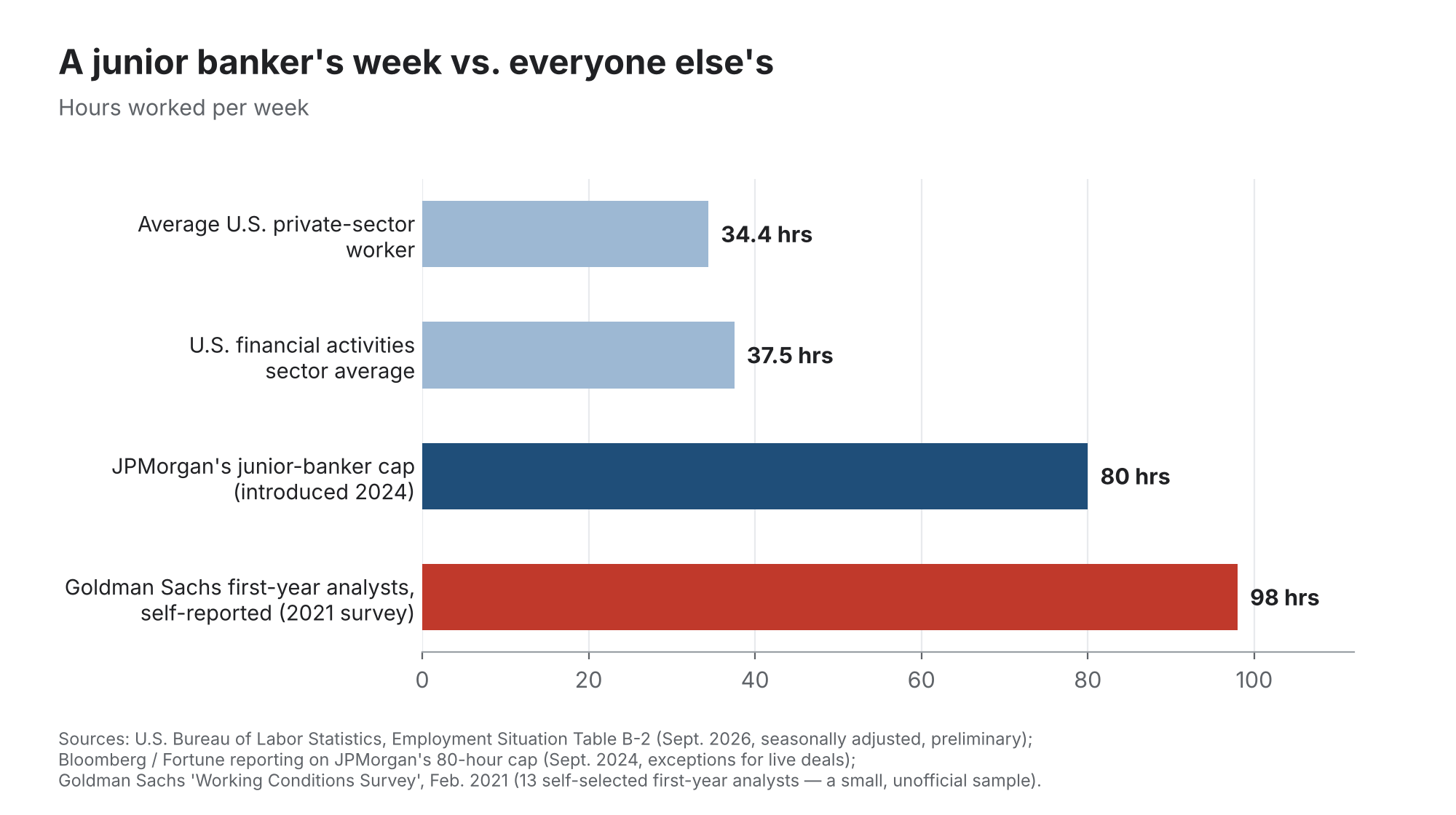
A 70-80 hour week is the norm. During a live deal, 120-hour weeks can happen too.
You might spend hours building a pitch deck, only for the client to change the direction at the last minute. You might be halfway through a financial model when someone asks you to update the assumptions.
You’re expected to respond quickly to emails, even when they come in at 3 a.m, which can get frustrating.
But there is a benefit to working in this kind of environment for a few years, you get very good at handling pressure.
Building a valuation model overnight becomes less intimidating after you’ve done it enough times. You get better at figuring out what information actually matters and you learn how to prioritize.
Those are skills that stay useful even after you leave banking.
4. Big Deals and C-Suite Access
One of the more amazing things about investment banking is how quickly you can get exposure to senior executives.
At most companies, a first-year isn't sitting anywhere near the CEO.
In banking, a first-year Analyst can work on a transaction involving a CEO or CFO and contribute to the materials being presented to them.
As an Analyst, you’re usually behind the scenes. But you still get to see how major companies make important decisions.
You can end up working on deals across different companies and industries. Deal teams are relatively small, so junior bankers usually take on a lot of responsibility early in their careers.
Every deal is also a little different. One week you might be working on an acquisition, and the next you could be looking at a completely different company or industry. This kind of experience is hard to replicate early in your career.
5. The Downsides of Working With Clients
Now for the part that usually gets left out when people talk about investment banking.
Your schedule isn’t your own.
The client decides when a deal needs to get done. If they want changes to a presentation at 9 p.m. on a Friday, you’re the one making those changes after cancelling your weekend plans.
This is one of the hardest parts of banking.
It’s not just that you have a lot of work. You often don’t know when that work is going to show up.
6. How Much Does the Prestige Really Matter?
Working at a top investment bank sounds impressive. And within finance, it is.
But outside of finance, the name of the bank probably doesn’t mean nearly as much as you think.
Someone in the industry will know the difference between a bulge bracket, an elite boutique and a middle-market bank. Your friends and family probably won’t. Tell someone you work at Moelis or Centerview and there’s a good chance they’ve never heard of the firm.
That’s not necessarily a bad thing. It’s just worth knowing that a lot of the prestige comes from being inside the finance world.
So if one of the reasons you want to work in investment banking is to impress everyone around you, you might be disappointed.
7. How Valuation Really Works
Valuation is a big part of investment banking.
As an Analyst, you’ll spend a lot of time working with financial models, DCFs, trading comps and other valuation methods. But there’s a difference between knowing the formulas and actually understanding how to build a model.
A model is only as good as the assumptions you put into it. Revenue growth, margins, discount rates, multiples - small changes in these assumptions can have a big impact on the final valuation.
That’s why valuation isn’t just about getting the right number. There’s also judgment involved. And this is something you really only learn by doing it.
The more models you build, the more comfortable you become with the numbers and get better at understanding what is actually driving a company’s valuation.
8. The Incentives Don’t Always Line Up
There’s another thing worth understanding if you’re thinking about a career in investment banking, the bank and the client don’t always have the same incentives.
Banks make money by advising on transactions so the bigger the deal, the bigger the fee.
This doesn’t mean bankers are trying to push bad deals onto their clients. The client still makes the final decision and a banker’s job is to advise them through that process.
But it’s important to understand how the incentives work.
If you’re going to work in investment banking, you should be able to recognize that what’s best for the bank and what’s best for the client aren’t always exactly the same thing.
9. Being Good at the Job Isn’t Enough
Investment banking is also a people business. Technical skills matter, but they’re not everything.
Banks are hierarchical and your reputation within your team can have a big impact on the opportunities you get. If senior bankers trust you, you’re more likely to get pulled into important deals and given more responsibility.
Bankers work 80-100 hour weeks, so they care about who they’re spending that time with. During recruiting, they’re not just looking at your technical skills but also asking whether they can trust you, put you in front of a client and rely on you when things get busy.
And that doesn’t change once you get the job. Your technical skills matter, but so does your reputation and whether people actually want you on their team.
10. Always On: The 24/7 Expectation
Finally, one of the hardest parts of banking to understand from the outside is that you’re never really off.
You might be checking your phone throughout the weekend because you don’t want to miss an important message. And one email from a client or senior banker can completely change your plans for the next few days.
Over time, constantly being available can make it difficult to properly switch off and can lead to burnout.
That’s one of the biggest trade-offs of banking. You’re paid well, but you give up a lot of control over your time.
The Bottom Line
Investment banking can be a great way to start a career.
You can make a lot of money early in your career, work on major deals, build strong technical skills and meet people who can help you move into other roles later.
But there’s a trade-off.
The hours are long, your schedule can change at a moment’s notice and being constantly available can eventually take a toll.
So I wouldn’t look at banking simply as a high-paying job.
You’re giving up a lot of your time and flexibility in exchange for the money and opportunities that come with the job.
For some people, that’s a great trade. For others, it isn’t.
If you’re comfortable with the hours and genuinely value the opportunities that come with banking, it can be a great fit for the early years of your career.