Overview
Overview
Investment banking has a reputation for being one of the toughest ways to start a career. The hours are long, the deadlines are tight, and the pressure rarely lets up. But the payoff is real. In just a few years, analysts learn how to read financial statements, build models, work on big deals, and think about business the way top executives do. That kind of training is hard to find anywhere else.
Still, most analysts don't plan to stay in banking forever. After a couple of years, many start looking at what else is out there. So what do investment bankers actually do after they leave the bank?
TL;DR
- Common next steps include private equity, hedge funds, venture capital and roles inside regular companies.
- The skills you learn in banking are useful in many different industries.
- Most analysts leave after two to three years, though some stay longer to get promoted.
- People usually leave for better hours, the chance to become an investor, or more meaningful work.
- Banking can lead almost anywhere, including business school or starting your own company.
1. The Most Common Exit Opportunities for Analysts
Banking analysts leave with a skill set that many employers want. They know how to value a company, how deals come together, and how to work fast under pressure. Because of that, they have a lot of options. Most of those options fall into three broad groups.
The first and most popular group is the "buy-side." These are firms that invest money, rather than advise others on how to invest it. Private equity is the biggest draw here. Private equity firms buy companies, work to improve them, and then sell them later for a profit. Bankers fit in well because they already spend their days valuing businesses and working on deals. Hedge funds are another option. They invest in a wide range of things, like stocks and bonds, and they suit people who love following the markets and digging into data. Venture capital is a third path. VC firms invest in young startups, and former bankers help decide which new companies have a real shot at growing big.
The second group is jobs inside regular companies. Corporate development teams help a company buy other businesses or build partnerships, so the work feels familiar to a banker, but the pace is usually calmer. Financial planning and analysis, often called FP&A, is all about setting budgets and predicting how the business will perform. Former analysts tend to do well here because they're comfortable with numbers. Some also move into business operations, where the focus is on running the company better and helping it grow. This is a good fit for people who like seeing a project through from start to finish, instead of handing it off once the deal closes.
The third group covers everything else. Many analysts go back to school for an MBA, which can open the door to senior roles and help them build a much bigger network. Others move into investor relations, where they explain a company's results and plans to its shareholders. It's a great choice for people who enjoy talking to people. And some take the leap into startups, either by joining a young company or starting their own. Knowing how money works is a big advantage when you're building something from scratch.
Whichever path interests you, networking makes a big difference. Many of the best jobs are never posted publicly. Going to industry events, reaching out to people from your school, and staying active on LinkedIn can help you find openings you'd never see otherwise.

2. A Real Example: One Analyst Group, Five Years Later
To see how this plays out in real life, let's look at a small group of analysts from the healthcare team at a global bank. Over three years, the team hired 21 analysts in total, with 11 in San Francisco and 10 in New York. They came into banking for different reasons, but they all went through the same demanding training.
Most of them stayed somewhere between one and five years, with an average of about two and a half years. Around six of the 21 stayed long enough to be promoted to Associate, which is the next step up from analyst.
When they did leave, the biggest share went to the buy-side. About 57%, or 12 people, moved into investing roles, mostly in private equity but also at hedge funds and venture capital firms. Another 33%, or 7 people, took jobs inside companies, working in areas like corporate development and operations. The remaining 10% took less common routes, such as starting a business or heading to business school.
What's interesting is that many of their careers didn't follow a straight line. A few went back for an MBA later on and used it to switch direction again. One analyst spent two years in private equity and then returned to the bank as an Associate. Another went into venture capital, then got an MBA, and later found a new role back in banking. Today, only about 10% of the group still works in investment banking. For most of them, banking was a strong starting point rather than a lifelong career.
3. Why Analysts Leave Investment Banking
People leave banking for many personal and professional reasons, but three come up again and again.
The first is work-life balance. The early years in banking are known for late nights, surprise weekend work, and constant deadlines. Some people enjoy that kind of rush, at least for a while. Many others reach a point where they simply want a schedule they can sustain. The hours can get a bit better as you move up, but burnout in those first few years is a big reason people walk away.
The second reason is the appeal of the buy-side. There's a common belief in finance that private equity jobs come with more respect, better pay, and a better lifestyle. The truth is more mixed. PE and hedge fund roles can be just as intense as banking. But many bankers are drawn to the idea of being the investor instead of the advisor. They like the idea of working on fewer deals at once and having a real say in how a company is run after it's bought.
The third reason is the desire for more meaningful work. A lot of junior banking work is repetitive. Analysts spend much of their time building slide decks, updating models, and getting ready for client meetings. That work teaches a lot, but after a while, some people want to help shape a company's direction or build something new. Roles in startups, venture capital, and corporate teams give them that chance.
Whatever is pulling you away, it's worth doing your homework before you make the jump. Talk to people who work in the role you're considering, as well as people who have left it. Every job looks better from the outside, so try to get an honest picture of both the good parts and the hard parts.

4. Beyond the Numbers: What Former Analysts Actually Did
The numbers tell part of the story, but the individual paths are just as interesting. Over the five years, people from this group ended up in many different industries, roles, and cities.
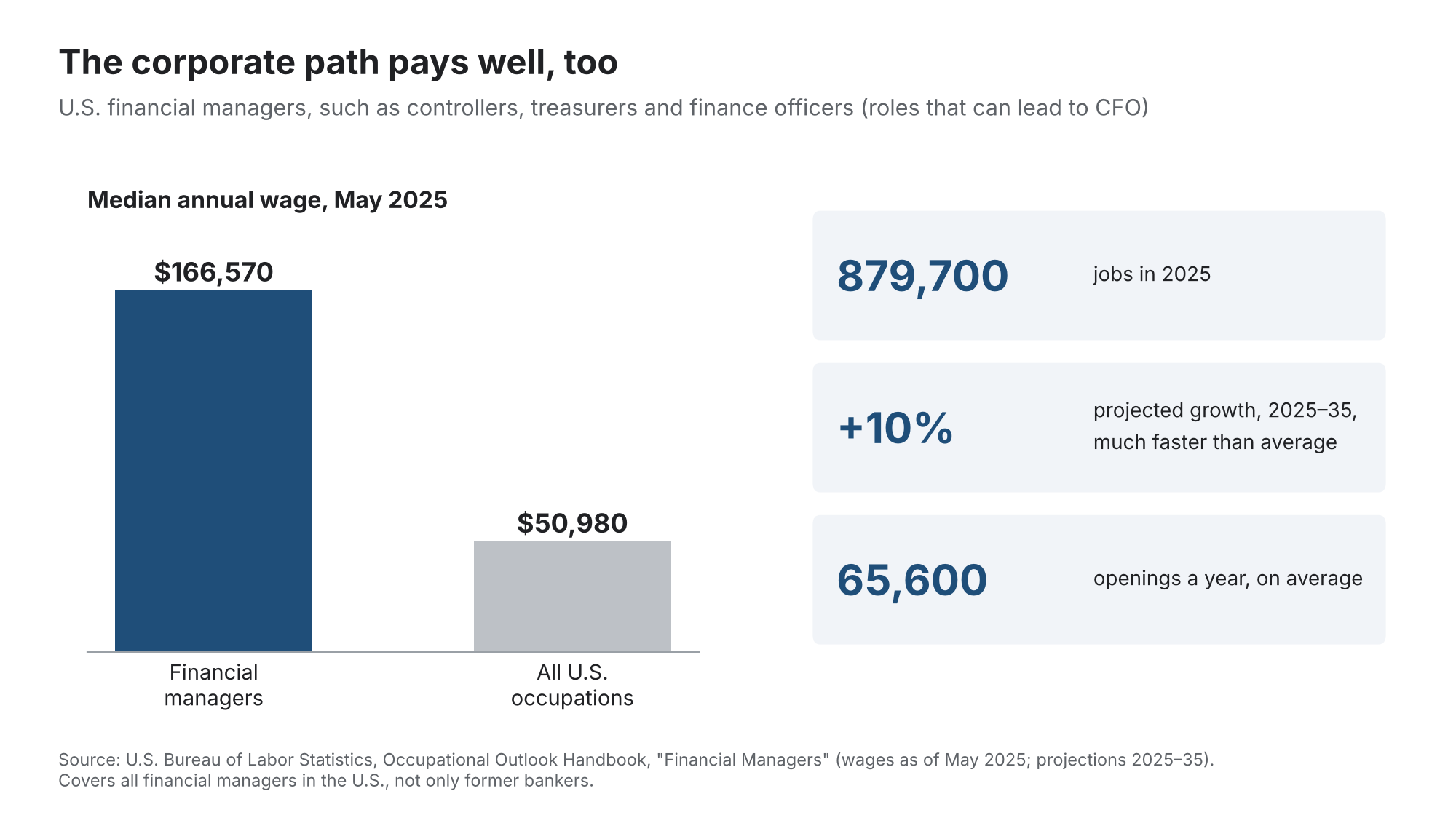
Several of them moved up quickly in the corporate world. With a strong finance background, they took on senior roles such as VP of Partnerships or CFO at fast-growing companies. Others chose investor relations or corporate development. They found that they could stay close to big decisions and deal-making while also enjoying a healthier lifestyle than banking allowed.
At least one analyst went the entrepreneur route. They first built a consumer product and later started a second company focused on online content. And a couple of analysts proved that leaving banking doesn't have to be permanent. They spent time in private equity or venture capital, picked up new skills and ideas, and then returned to their old bank at a higher level.
One habit that helps no matter which path you take is keeping a record of your work. Write down the deals you worked on, the results you helped deliver, and any numbers that show your impact. Having clear results on your résumé and LinkedIn profile makes it much easier to explain your value when you change jobs, especially if you're moving into a new industry.
5. How to Plan Your Exit
Whether you're about to leave banking or just getting started, a little planning can help you make the most of your experience.
Start by building relationships early. Don't wait until you're ready to quit to start reaching out to people. The sooner you connect with people in the field you want to join, the better you'll understand what the work is really like and how to get in.
It also helps to keep sharpening your skills and to choose your deals with care. If you already know where you want to go, try to work on projects that point in that direction. For example, if your goal is to help tech startups grow, asking to work on deals with tech clients will make you a much stronger candidate for venture capital or startup roles later. The same idea applies to healthcare, consumer brands, or any other industry.
You might also think about more school. An MBA or a specialized master's degree isn't required, but it can help a lot if you want to move into leadership or leave finance altogether.
Finally, think about the long term. A high-paying offer can be very tempting, but try to picture where you want to be in five or ten years. The best exit is the one that moves you closer to that picture, not just the one with the biggest paycheck.
The Bottom Line
Investment banking is a demanding way to start a career, but it gives you skills and experience that are hard to match. You learn how deals work, how to build strong financial models, and how to work with high-profile clients. Just as important, it opens the door to many other careers.
As this group of analysts shows, most people move on within a few years. Some go to private equity or hedge funds, some join companies, and some start businesses of their own. There's no single right answer. The key is to understand your options, think about what you really want, and choose a path that builds on the hard work you've already put in.