Ranking · hedge funds100 schools
Top Schools for Hedge Funds
100 US schools ranked by the number of alumni whose job titles include hedge fund, counted from aggregated public profile data. Each school links to its full numbers across investment banking, private equity, venture capital, and hedge funds.
- Schools ranked
- 100
- Hedge Funds profiles
- 8,353across all schools, all years
- #1 by profiles
- Columbia University416 profiles
- Networks that lean this way
- 72schools with 500+ IB profiles
 #1Columbia University416 hedge fund profilesPhoto: Ajay Suresh from New York, NY, USA · CC BY 2.0
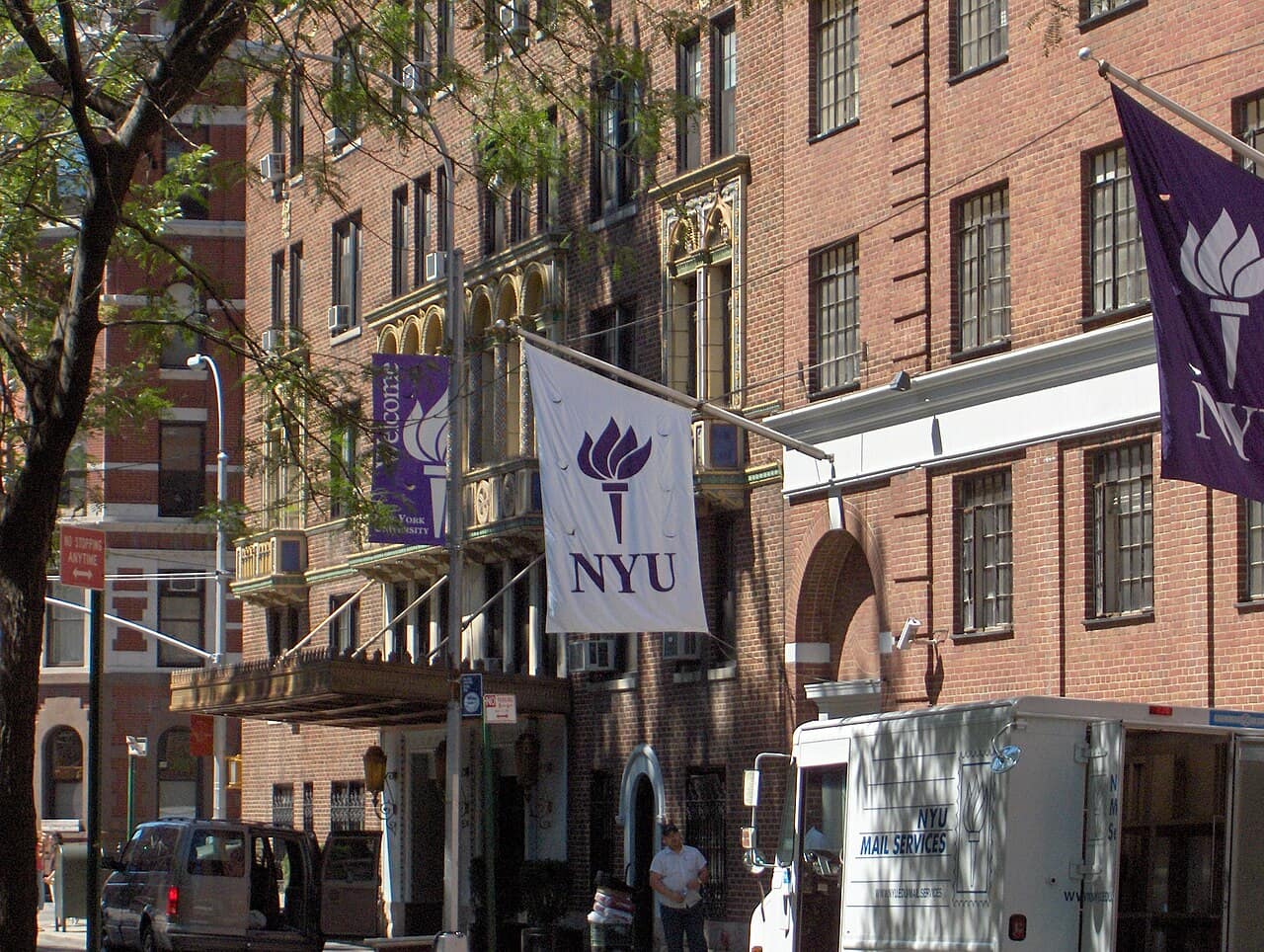 #2New York University403 hedge fund profilesPhoto: Jonathan71 · CC BY-SA 2.5
 #3Baruch College351 hedge fund profilesPhoto: Beyond My Ken · CC BY-SA 4.0
Alumni whose job title has ever included the phrase “hedge fund”, at any firm worldwide.
All 100 schools
- 1Columbia University#1416
- 2New York University#21403
- 3Baruch College#34351
- 4Harvard University#2266
- 5Cornell University#8246
- 6Northeastern University#40239
- 7UC Berkeley#12215
- 8University of Pennsylvania#3212
- 9University of Chicago#6187
- 10Boston University#46185
- 11University of Illinois Urbana-Champaign#42177
- 12UCLA#23175
- 13Rutgers University#64174
- 14Stanford University#14163
- 15University of Michigan#26151
- 16MIT#19148
- 17Penn State#43144
- 18Yale University#5140
- 19Fordham University#52135
- 20University of Texas at Austin#24132
- 21Boston College#15118
- 22Ohio State University#77106
- 23Northwestern University#20104
- 24University of Virginia#10102
- 25Duke University#7101
- 26Georgetown University#4101
- 27University of Southern California#17101
- 28Arizona State University#9399
- 29Princeton University#995
- 30Villanova University#4190
- 31UMass Amherst#8487
- 32University of Notre Dame#1383
- 33Bentley University#5782
- 34Brown University#1681
- 35University of Maryland#6181
- 36Indiana University Bloomington#3777
- 37UNC Chapel Hill#3076
- 38University of Washington#7375
- 39University of Connecticut#8573
- 40Johns Hopkins University#3672
- 41University of Miami#5171
- 42Lehigh University#5668
- 43Southern Methodist University#2968
- 44University of Wisconsin-Madison#4768
- 45Georgia Tech#5566
- 46Babson College#3563
- 47George Washington University#6763
- 48University of Florida#4563
- 49Dartmouth College#1161
- 50UC San Diego#6960
- 51WashU St. Louis#3359
- 52Binghamton University#7957
- 53Fairfield University#8754
- 54Syracuse University#9554
- 55Carnegie Mellon University#4953
- 56University of Rochester#6851
- 57Vanderbilt University#1851
- 58Florida State University#8250
- 59Emory University#2747
- 60Texas A&M University#5046
- 61UC Santa Barbara#6244
- 62Bucknell University#6542
- 63Miami University (Ohio)#7542
- 64Tulane University#6341
- 65UC Irvine#8641
- 66Wake Forest University#2541
- 67Seton Hall University#10039
- 68Trinity College (CT)#7639
- 69University of Colorado Boulder#9139
- 70University of Richmond#5439
- 71American University#8838
- 72Michigan State University#7836
- 73Williams College#3136
- 74Colgate University#4435
- 75Purdue University#9835
- 76University of Pittsburgh#9734
- 77Texas Christian University#6033
- 78University of Minnesota#9432
- 79Middlebury College#2830
- 80Bowdoin College#5828
- 81Wesleyan University#6627
- 82Lafayette College#8326
- 83Santa Clara University#9026
- 84Providence College#9925
- 85William & Mary#7124
- 86Pepperdine University#9223
- 87University of Georgia#5923
- 88University of South Carolina#7423
- 89College of the Holy Cross#8122
- 90Amherst College#3221
- 91Rice University#3821
- 92Claremont McKenna College#3920
- 93Baylor University#8918
- 94Hamilton College#4818
- 95Howard University#8016
- 96Washington and Lee University#2213
- 97Case Western Reserve University#9610
- 98Davidson College#536
- 99Pomona College#726
- 100Swarthmore College#705
Schools whose networks lean hedge funds
Profiles per 100 IB profilesHedge Funds alumni profiles per 100 IB alumni profiles, among the 72 schools with at least 500 IB profiles. This measures the mix of a school’s alumni network. It does not measure how often its bankers move into hedge fund roles.
The job, the firms, and the pay
Hedge funds invest in public markets. The multi-manager platforms hire from bank analyst programs and increasingly straight from school. Representative firms: Citadel, Millennium, Bridgewater, Point72, D. E. Shaw, Two Sigma, Elliott.
Junior analysts typically earn a $150k to $200k base. Bonuses move with performance, and $300k+ all-in years are common at the large platforms.
Pay figures are typical US ranges from public comp surveys, not from this dataset.
How we counted
Counts come from People Data Labs, which aggregates public professional profiles. For each school we counted people who list the school in their education and have held a job title containing the phrase “hedge fund” at any point. The count includes undergraduate and graduate alumni and covers roles at any firm worldwide. Titles that skip the phrase (an “Analyst” at a hedge fund firm, for example) are not counted, so treat these as a consistent comparison between schools rather than a census. Data pulled 2026-07-30.
The size-adjusted view uses fall 2023 total undergraduate enrollment from the NCES IPEDS Fall Enrollment dataset. It divides the all-time profile count by a current enrollment headcount and reports the result per 1,000 undergraduates. Use it as a school-size comparison. It does not measure placement for a graduating class.
