Overview
Overview
If there is one thing everyone knows about investment banking, it is that the hours are long.
Stories about analysts working 80, 90, or even 100+ hours a week are pretty common. Some banks have tried to put limits on hours, but those limits can be hard to stick to when a deal is moving quickly.
So why does the job require so much time?
A big part of it comes down to the culture of banking, unpredictable client demands, small deal teams, and the amount of money riding on each transaction.
For someone starting out, the tradeoff can be worth it. You get paid well, learn a lot, and have strong exit opportunities. In exchange, you give up a lot of control over your time.
TL;DR
- Long hours are normal in banking, and in some groups, working more can even become a badge of honor.
- A request that comes in late at night or over the weekend can quickly turn into several hours of work.
- A big transaction can still have only one or two analysts doing most of the work.
- Senior bankers have a strong incentive to get deals done, especially when millions of dollars in fees are on the line.
- The pay, experience, network, and exit opportunities make the hours more manageable for people who see banking as a short-term career step.
1. The Culture Around Long Hours
Long hours start to feel normal when everyone around you is working the same way. As a new analyst, you might start with an 80-hour week and quickly realize that this is considered normal in your group.
Some banks even track hours through weekly reports. These reports can show how many hours people across a group are working. When everyone can see who worked 80 hours and who worked 120 that week, it can create a strange sense of competition.
There can also be pressure around reporting the hours themselves. Some people under-report because they do not want to make their senior bankers look bad. Others might report every hour because they want to show that they are working hard. Neither is a particularly healthy dynamic, but it shows how much the culture around hours can affect people.
As a new analyst, you will not have much control over the hours. What you can control is the team you join. Some groups are much better than others when it comes to workload and culture.

2. Clients and Weekend Emails
Banking is a client-service business. The client is paying the bank a lot of money, so when they need something, the expectation is that the bank will get it done.
That is where the unpredictability comes in. A managing director might be traveling all day and then send an analyst a long assignment on Friday night. A client might ask for a new analysis before a Monday morning meeting. Suddenly, the weekend you had planned is gone. This is one of the hardest parts of banking because you never completely know when work is going to come up. You can have dinner plans, a birthday, or a vacation planned and still get a call asking you to update a model or finish a presentation.

3. What Happens When a Deal Goes Live
The hours are not always terrible. When a team is working on pitches and trying to win new business, things can be relatively manageable.
However, a live deal is different.
Once a client hires the bank for an M&A deal, IPO, or debt raise, there is usually a real deadline attached to the work. You often need to build a model, run an analysis, or make major changes to a presentation in a very short amount of time.
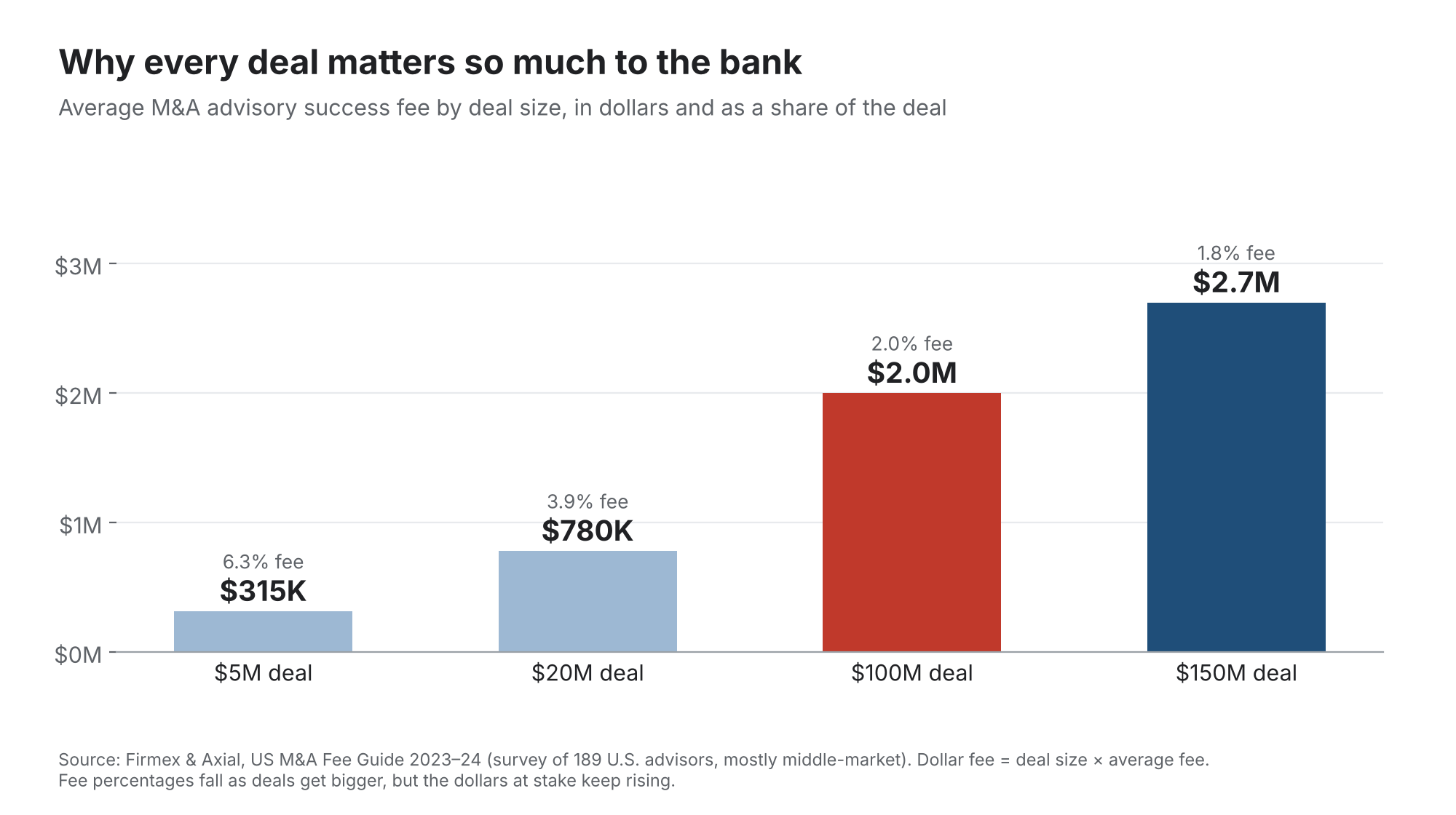
The bank also has a lot at stake. If a $100 million transaction generates a 3% fee, that is $3 million of revenue for the bank. When that kind of money is involved, the client usually expects the bank to move quickly.
The teams working on these deals are also usually smaller than you might expect. A large transaction might have one or two analysts, an associate, a vice president, and a few senior bankers. That means there is a lot of work for a very small number of people.
And when as the analyst, you are usually closest to the actual work. You are building the model, updating the numbers, changing the slides, and making sure everything is ready for the next review.
4. Why Senior Bankers Keep Pushing
Senior bankers have more control over their schedules than analysts, but they also have their own reasons for pushing hard.
A large part of their compensation can come from bonuses, and those are tied to the revenue they bring into the bank and the deals they close. So when there is a big transaction on the table, there is a real financial incentive to keep pushing until it gets done.
Banks have tried to address this with better policies around working hours for junior bankers, some firms have even tied part of senior management's incentives to how they manage their teams. The problem is that these policies are difficult to enforce when there is a major deal happening. If a client needs something at midnight and the deal is worth millions of dollars in fees, the pressure to get the work done is still there.
This is why banking hours can be so unpredictable. You might have a relatively normal week and then suddenly find yourself working every night including weekends because a deal has picked up momentum.

5. Why Analysts Still Sign Up
If the hours are this brutal and unpredictable, why do people still want to work in banking?
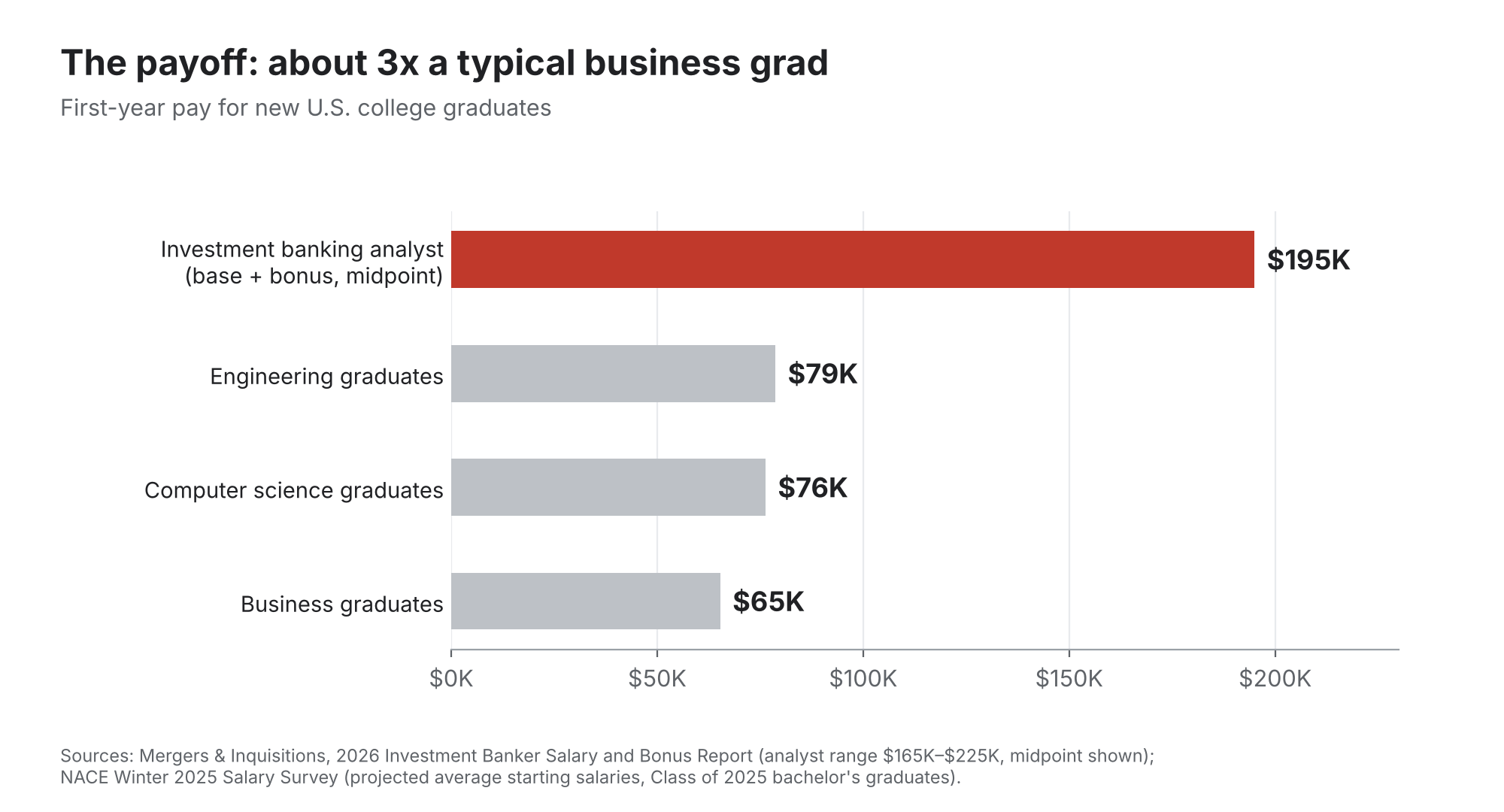
The money is obviously a huge part of the overall appeal of a banking career, analysts can make significantly more than many of their peers right out of college, especially once bonuses are included.
But the bigger reason for many people is what banking can lead to. After a couple of years, analysts can move into private equity, hedge funds, corporate development, or other finance roles. The experience and network you build in banking can open a lot of doors. You spend your first few years building models, working on transactions, analyzing companies, and seeing how senior people make decisions. It is not always fun, but the learning curve is quite steep.
That is why a lot of analysts go into banking with a timeline in mind. They know the hours will be tough, but they see it as a short-term tradeoff for the experience and opportunities they can get later.
If you know you want to transition out of banking after a couple of years, start thinking about it early. Build relationships with people in the industries you are interested in and keep track of the work you are doing. It will make the next move much easier.
The Bottom Line
There is no secret reason why investment bankers work long hours. It comes down to the way the industry works.
Clients expect the bank to be available, deal teams are small and deadlines can change quickly. And there can be millions of dollars in fees riding on a transaction getting done.
The culture adds another layer. When everyone around you is working 80-100 hours, those hours start to feel normal. Some weeks are much better than others, but when a deal gets busy, you can lose a lot of control over your schedule very quickly.
For many people, the tradeoff is worth it. You get amazing compensation, valuable skills, a good network, and career opportunities that can be difficult to get elsewhere.
The important thing is to know what you are signing up for before you start.