Overview
Overview
If you are trying to break into investment banking, one of the first questions that comes to mind is - which bank should I target?
The answer is not as simple as looking at a league table. Goldman Sachs, Morgan Stanley, J.P. Morgan, Evercore, Centerview and the other major names all have strong reputations, but they are strong for different reasons.
Some banks have better overall deal flow. Others are especially strong in a particular industry. Some have larger teams and more resources, while others have smaller teams where analysts get more responsibility. Culture can also be very different from one group to another, even within the same bank.
So instead of thinking about which bank is ranked highest, it is worth looking at what each bank is actually good at and what that means for your career.
TL;DR
- The major full-service banks offer prestige, large deal teams and broad exposure across industries.
- Boutique banks can offer strong deal experience, smaller teams and, in some cases, higher compensation.
- A bank can be average overall and still have an excellent group in a specific industry.
- Your experience can vary a lot depending on the team you join, so the bank name is not the only thing that matters.
- Deal flow, group strength, culture, mentorship and exit opportunities are all worth looking at before making a decision.
1. The Elite Full-Service Banks
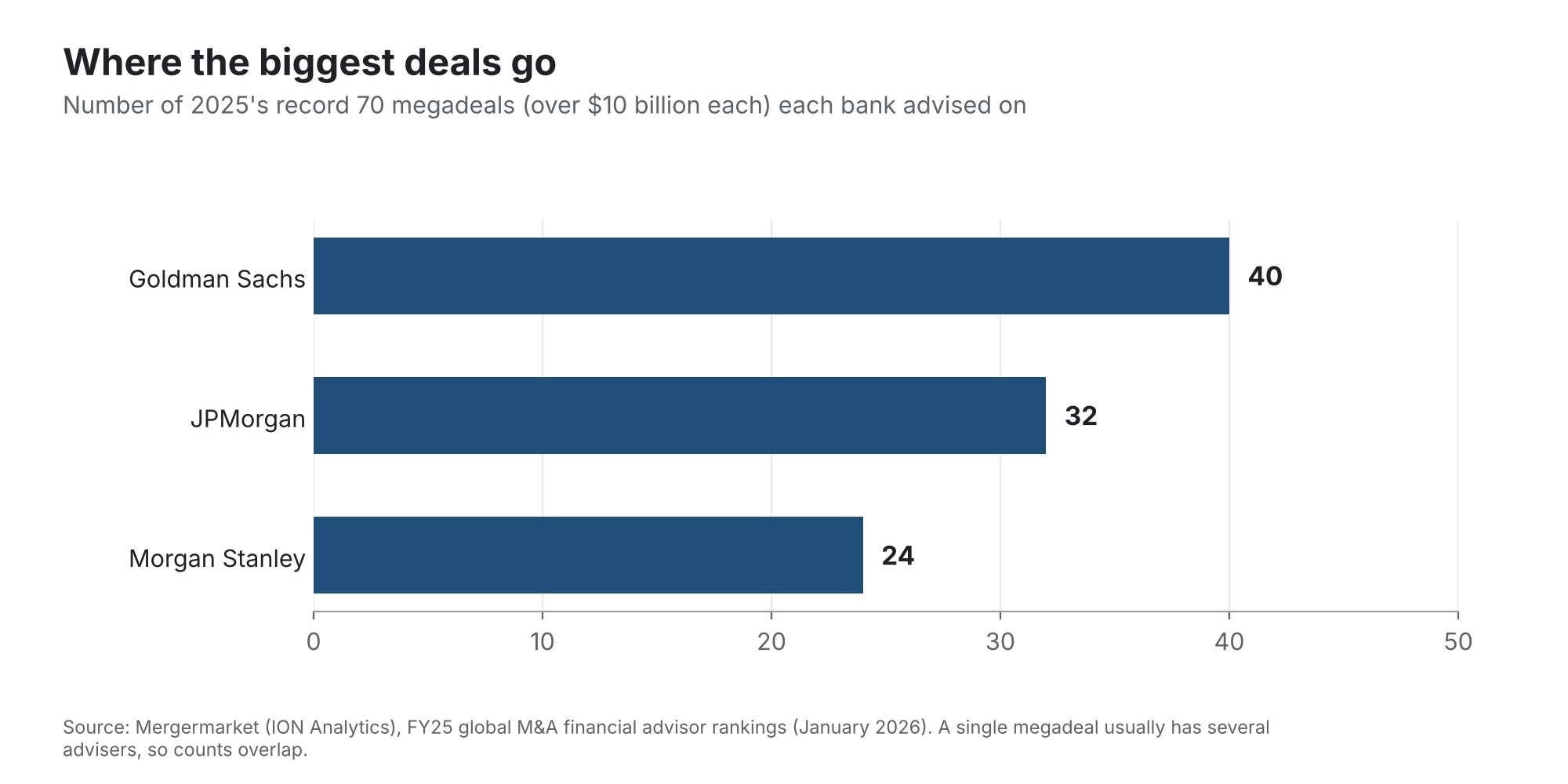
Let’s start with the names that are usually at the top of the list: Goldman Sachs and Morgan Stanley.
Both have strong brands, large client bases and experience across almost every major industry. You will get exposure to large transactions and well-known companies, which can be valuable early in your career.
Goldman Sachs is known for its brand, strong client relationships and large alumni network. Compensation is competitive, although some boutiques can pay more. The bigger advantage is the combination of deal experience, reputation and the number of people who have gone through the firm and moved into senior roles across finance.
Morgan Stanley is particularly strong in technology, media and telecom. The bank has worked on a large number of high-profile IPOs and M&A transactions, which makes it attractive to people interested in those sectors.
Both banks also have strong recruiting pipelines into private equity and other buy-side roles.
2. Other Major Full-Service Banks
Goldman Sachs and Morgan Stanley are not the only major players. J.P. Morgan has one of the strongest overall identities in banking. It has a large balance sheet, a huge client base and strong businesses across M&A, healthcare, leveraged finance and other areas.
One of J.P. Morgan’s biggest advantages is that it can do more than advise on a deal. Because it has such a large balance sheet, it can also provide financing to clients. That can help the bank win large mandates and build long-term relationships.
Bank of America is another major full-service bank with strong coverage across healthcare, financial sponsors and M&A. Its size gives it a lot of resources, although large teams can also mean more competition among junior bankers.

3. Strong Mid-Tier Banks
You do not have to work at one of the biggest banks to get good deal experience.
Citi is a good example. Its global presence gives it particularly strong exposure to international and emerging markets. That can be useful if you want to work on cross-border transactions or build experience in less developed markets.
Barclays has also built a strong investment banking business in the United States while maintaining its European roots. It has solid groups in areas such as healthcare and financial sponsors, although the experience can vary across teams.
UBS is another bank worth considering, particularly after its acquisition of Credit Suisse. The deal made UBS much larger, but large integrations also take time and can create uncertainty for employees.
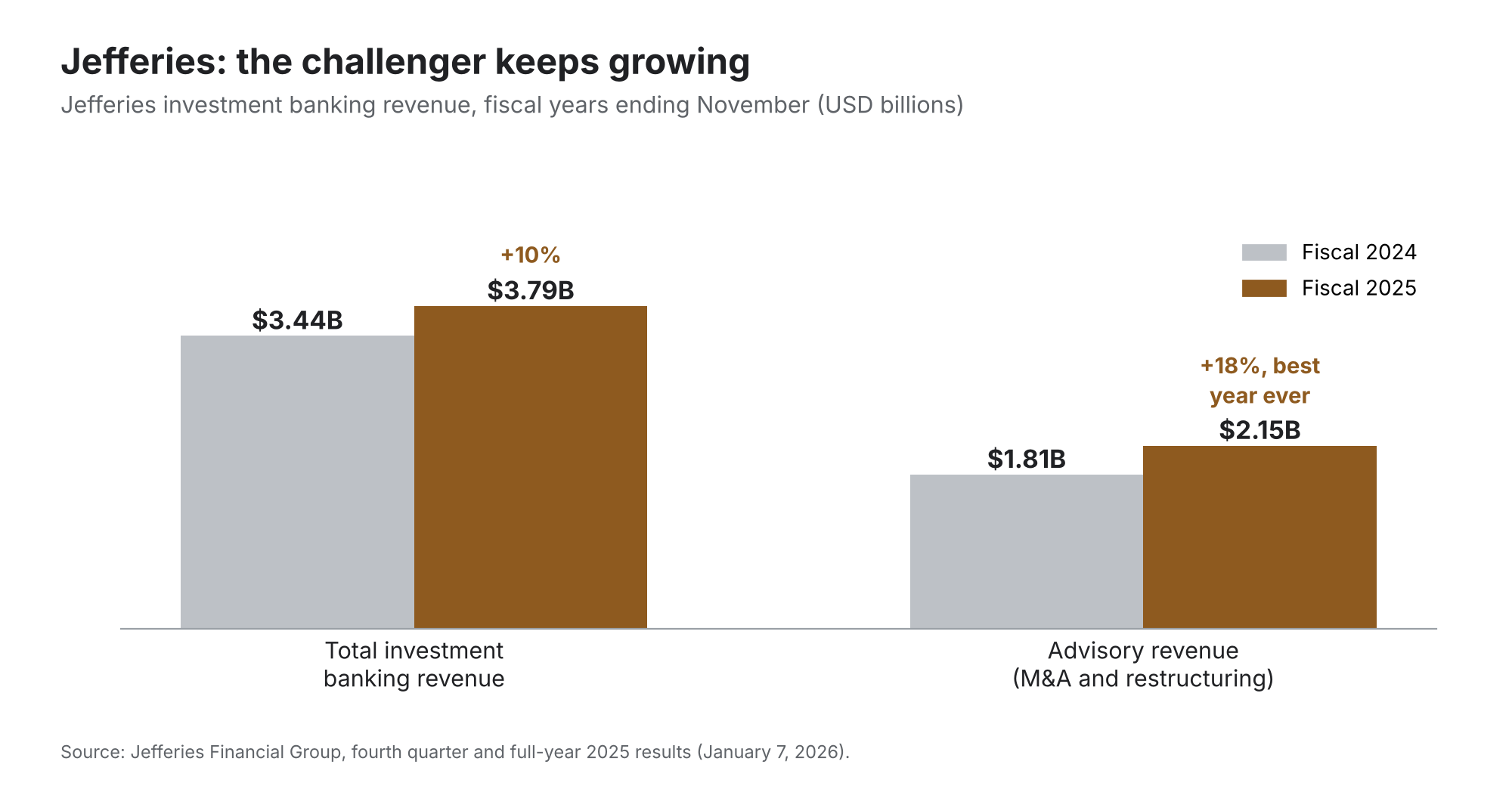
Jefferies has also become a serious competitor in investment banking. It has grown its position in the league tables and has a strong focus on investment banking, although the culture is known to be pretty intense in some groups.
4. The Top Boutique Banks
Boutique banks are smaller than the major full-service banks, but some of them work on deals that are just as large.
Evercore, Centerview, Qatalyst and PJT Partners are some of the best-known examples. These firms focus heavily on advisory work, particularly M&A and restructuring, rather than trying to offer every financial service.
The smaller teams can be a big advantage for junior bankers. There are fewer layers between you and the senior bankers, and you can get more exposure to the actual deal. Some boutiques also pay very well, sometimes even more than the bulge-bracket banks.
Evercore is one of the largest independent advisory firms and is particularly strong in M&A, restructuring and technology, media and telecom. Centerview has a strong reputation in areas such as healthcare and consumer. Qatalyst is much more specialized, focusing almost entirely on large technology M&A. PJT has built a strong reputation in both M&A and restructuring.

5. Other Strong Boutique Banks
There are also several boutiques that may not get as much attention as Evercore or Centerview but are still very strong in specific areas.
Lazard is one of the oldest independent advisory firms and has a strong reputation in restructuring, healthcare and consumer. It also has a strong history of sending analysts into competitive private equity roles.
Moelis has built a strong reputation in M&A and restructuring. The firm is known for lean teams and demanding hours, which can mean a lot of responsibility for junior bankers.
Perella Weinberg Partners, or PWP, has focused on areas such as healthcare and restructuring. It has a close-knit culture and can offer strong exit opportunities, although deal flow and team stability can vary over time.

6. Emerging Firms and Niche Players
Some banks are much more specialized. Rothschild has a particularly strong position in Europe, including areas such as restructuring, industrials and healthcare. Guggenheim has worked on large technology, media and telecom and healthcare transactions.
Then there are firms that are built almost entirely around one industry. LionTree, Raine Group and Allen & Co. are good examples in media and entertainment.
These firms may not have the same name recognition as J.P. Morgan or Goldman Sachs outside finance, but that does not mean they are less respected within their industries. If you want to build a career in a specific sector, working at a bank that is known for that sector can actually be a major advantage.
Raine Group and Allen & Co., for example, have worked on major media and entertainment transactions. Allen & Co. is particularly selective and is known for keeping a relatively low profile.
7. Comparing the Different Tiers
There is no perfect type of bank to work for. The biggest full-service banks give you strong training, global deal exposure, large alumni networks and a recognizable name on your resume. The downside is that teams can be large and the hierarchy can be more structured and complex.
Boutiques are almost the opposite. Teams are smaller, you may work more closely with senior bankers, and you can get more responsibility early. The tradeoff is that the firm may have less financing capability, fewer resources or a narrower focus.
Mid-tier banks can sit somewhere in between. They may have strong groups in specific industries or regions without having the size of a J.P. Morgan or Goldman Sachs.
The important thing is not to choose a bank based only on its overall ranking.
Look at the group you are joining. Look at the type of deals they work on. Talk to current and former analysts. Find out what the culture is actually like and where people go after leaving.
The Bottom Line
There is no single ranking that tells you which investment bank is best for your career.
Goldman Sachs, J.P. Morgan or Morgan Stanley may be the better choice if you want a large global platform. An elite boutique may be better if you want smaller teams and more exposure to senior bankers.
The group matters too. A great healthcare team at a smaller bank can be a much better experience than a weak group at a bank with a better overall reputation.
When you are choosing where to apply or deciding between offers, look beyond compensation and the name on the building. Look at the deals, the people, the group, the culture and where analysts actually end up.
The best bank is not always the one at the top of the league table. It is the one that gives you the experience and opportunities you actually want.